Hey there,
As I write this back in Barcelona after ringing in the New Year in Philippines. I can’t help but reflect on how 2025 has been the year AI stopped being a “nice-to-have” and became the infrastructure layer of marketing itself. Watching the fireworks over a small town on the Philippine coast while half my feed was filled with AI-generated New Year’s predictions felt both ironic and fitting—because that’s exactly where we are now.
December brought us some genuinely transformative updates that will shape how we work in 2026. From Google’s latest core update shaking up rankings to Meta turning your AI chats into ad targeting signals, this month made one thing clear: the platforms are moving faster than ever, and the winners will be those who adapt without losing sight of what actually drives results.
Let’s dive into what happened and what it means for your strategy.
1️⃣ Search Marketing
Google December 2025 Core Update Completes After 18-Day Rollout
Google wrapped up its third major core algorithm update of 2025 on December 29, following an 18-day rollout that started December 11. The update hit YMYL content, news publishers, and e-commerce sites particularly hard, with significant ranking volatility spikes on December 13 and 20. Google characterized this as a “regular update” aimed at surfacing more relevant, satisfying content across all site types.
💡 Why it matters: Three core updates in one year is aggressive even by Google’s standards. This tells me they’re still figuring out how to balance traditional signals with AI-generated content flooding the ecosystem. If you saw ranking drops, it’s likely because your content didn’t demonstrate enough expertise, experience, or firsthand value—the things AI still struggles to replicate convincingly.
🚀 Takeaway: Stop chasing keywords and start building genuine topical authority. Document your team’s real expertise, add author bios with credentials, and make sure every piece of content answers “why should someone trust us on this topic?” Google’s getting better at spotting content created to rank versus content created to genuinely help.
Source: Search Engine Land
AI Overview Ads Expand to 12 International Markets
Google quietly rolled out advertising within AI Overviews to 12 markets beyond the US—including Australia, Canada, India, Indonesia, Kenya, Malaysia, New Zealand, Nigeria, Pakistan, Philippines, Singapore, and South Africa. The expansion happened via a documentation update on December 19, with no fanfare or official announcement. Notably, sensitive verticals like healthcare, finance, gambling, and politics remain excluded from AI Overview ad placements.
💡 Why it matters: This is Google hedging its bets on the future of search. AI Overviews fundamentally change user behavior—people get answers without clicking—so monetizing that experience is critical for Google’s business model. For advertisers, this opens massive new inventory in high-intent moments, but it also means your organic traffic from these queries might not recover.
🚀 Takeaway: If you’re advertising in any of these 12 markets, review your Search and Performance Max campaigns—you’re already eligible for AI Overview placements by default. The bigger question: are you creating content that AI Overviews will cite as a source? Being referenced in the AI answer is the new page-one ranking.
Source: Google Ads Support
Search Console Launches AI-Powered Natural Language Configuration
Google introduced an experimental AI feature in Search Console that lets you describe what analysis you want in plain English, and it automatically sets up the right filters, date ranges, and comparisons. Instead of manually building complex reports, you can now just ask: “Show me queries that lost traffic in the past month compared to the previous month.”
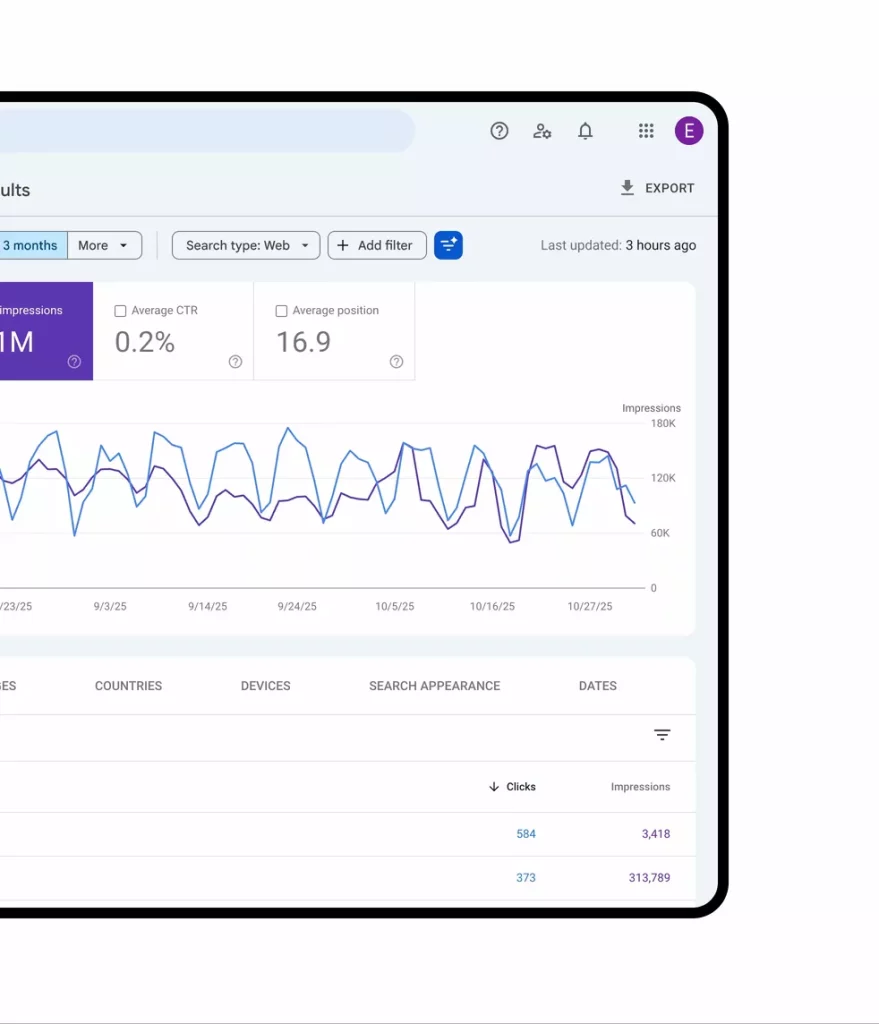
💡 Why it matters: This democratizes SEO data access in a way that actually matters. Too many strategic decisions get bottlenecked because only technical SEO specialists know how to pull the right reports. When your CMO or product lead can ask questions conversationally and get instant answers, you move faster as an organization.
🚀 Takeaway: Start training your non-technical team members to use this. Have your content managers run their own traffic analyses. Let your sales team check which product pages are trending in search. The competitive advantage isn’t having the data anymore—it’s having the entire team able to act on it without waiting for the analytics queue.
Source: Google Search Central Blog
2️⃣ Marketing Technology
Amazon Rufus AI Shopping Assistant Drives $10B Incremental Sales
Amazon CEO Andy Jassy revealed that Rufus, their conversational AI shopping assistant, is on track to generate over $10 billion in incremental annual sales. With 250 million customers using it in 2025, engagement metrics are staggering: monthly active users up 149%, interactions up 210%, and customers who engage with Rufus are 60% more likely to complete a purchase. Amazon rolled out 50+ technical improvements including automatic price-drop purchasing and visual search.
💡 Why it matters: This is the proof point the entire e-commerce industry needed. Conversational AI isn’t just a novelty—it’s a revenue driver at massive scale. Amazon just validated that people will trust AI agents to make purchase decisions on their behalf, which fundamentally changes the customer journey. Every e-commerce platform is now scrambling to build their version of this.
🚀 Takeaway: If you sell on Amazon, optimize your product listings for conversational queries, not just keyword stuffing. Rufus pulls from product descriptions, reviews, and Q&As to answer customer questions. Write like you’re talking to a customer, not gaming an algorithm. And if you run your own e-commerce site, start evaluating conversational AI tools—this is table stakes by 2026.
Source: Fortune
Salesforce Acquires Qualified to Accelerate Agentic AI Strategy
Salesforce announced it’s acquiring Qualified, a specialist in AI-driven sales engagement and conversational marketing, to integrate directly into its Agentforce platform. Qualified’s AI agents handle early-stage interactions—chatting with website visitors, qualifying leads, routing conversations—all automatically. The deal represents Salesforce’s shift toward “agentic enterprise” solutions that scale GTM teams through automation rather than headcount.
💡 Why it matters: We’re watching the CRM market fundamentally transform from “software that helps humans work” to “AI agents that do the work autonomously.” Salesforce isn’t just adding features—they’re rebuilding the entire go-to-market motion around the assumption that AI agents will handle 70% of the lead qualification workload. That’s not incremental; that’s structural.
🚀 Takeaway: If you’re running B2B marketing, the question isn’t whether to adopt agentic AI—it’s how fast you can test it before your competitors do. Start with high-volume, low-complexity interactions: initial website chat, basic qualification, meeting scheduling. Let AI handle the repetitive stuff so your humans can focus on high-value conversations with qualified buyers.
Source: Salesforce
HubSpot Releases Breeze Social Post Agent and Enhanced Automation
HubSpot dropped significant December updates including Breeze Social Post Agent for AI-powered social content generation, expanded Customer Agent capabilities with CRM property access and API automation, and new workflow controls for ticket management. Additional features include an IP Ranges API for firewall management, Buying Groups through OrgChartHub integration, and improved sandbox deployment tools.
💡 Why it matters: HubSpot serves 200,000+ customers, so when they ship AI agents that can generate social content and automate CRM workflows, that’s millions of marketers suddenly having access to capabilities that required dedicated teams six months ago. The gap between “marketing team at enterprise” and “marketing team at startup” just narrowed significantly.
🚀 Takeaway: If you’re a HubSpot customer, dedicate a few hours to testing Breeze Social Post Agent this month. Don’t expect it to replace your content team—expect it to 10x your ability to test variations, localize content, or maintain posting consistency. The marketers who win with AI tools are the ones who treat them as force multipliers, not replacements.
Source: HubSpot Community
3️⃣ Social Media Marketing
Meta Begins Using AI Chat Interactions for Ad Personalization
Starting December 16, Meta began using your conversations with Meta AI—including chats and voice interactions—to personalize ads and content recommendations across Facebook, Instagram, WhatsApp, and Messenger. If you’re chatting with Meta AI about travel destinations or shopping for running shoes, that data now influences which ads you see. The change applies globally except in the EU, UK, and South Korea due to stricter privacy laws.
💡 Why it matters: This is a massive new signal for Meta’s ad algorithm. Until now, they optimized based on what you clicked, liked, and engaged with. Now they know what you’re thinking about through your AI conversations—which is orders of magnitude more valuable for targeting intent. For advertisers, this potentially means significantly better audience matching, but it also raises the stakes on privacy backlash.
🚀 Takeaway: Your Meta campaigns just got access to intent data that was previously locked in search engines. If you’re running travel ads, someone asking Meta AI “best beach destinations in April” is now targetable. The practical move: refresh your audience testing. Broad targeting might suddenly perform better because Meta can now match intent in ways it couldn’t before.
Source: Meta
Instagram Launches Algorithm Transparency Feature for Reels
Instagram rolled out “Your Algorithm” in the US—a tool that shows you exactly which topics influence your Reels recommendations and lets you adjust them. Users can add interests, remove topics, adjust prominence, or reset recommendations entirely. Instagram also officially confirmed the shift from hashtag-based to keyword-based discovery, meaning your captions now function like search-indexable content.
💡 Why it matters: This is Instagram admitting that algorithmic black boxes hurt user trust and engagement. More importantly for marketers, it fundamentally changes content strategy: hashtags are officially secondary to keyword-rich captions. Your Reels now compete in a semantic search environment, not just a following-based feed. The discoverability playbook just got rewritten.
🚀 Takeaway: Audit your Reels captions immediately. Are you writing for discoverability or just throwing in trending hashtags? Start treating captions like SEO-optimized meta descriptions: front-load relevant keywords, use natural language that matches how people search, and structure content around clear topics. Consistency in topic focus now matters more than posting volume.
Source: Instagram
YouTube Expands Shorts Ads with Comments, Creator Links, and Mobile Web
YouTube rolled out major Shorts advertising updates: comments are now enabled on Shorts ads, creators can add direct links to brand websites within branded content (solving the attribution problem), and Shorts ads launched on mobile web and TV. According to YouTube’s research with Kantar, Creator Ads on Shorts increase purchase intent by 8.8% and drive 2.9x more consumer spending intent versus competitors.
💡 Why it matters: YouTube just solved short-form video’s biggest advertising weakness: attribution. Until now, Shorts campaigns were great for awareness but terrible for tracking conversions. Direct creator linking to brand websites changes that equation entirely. For performance marketers who’ve avoided short-form video because “it doesn’t convert,” that excuse just evaporated.
🚀 Takeaway: If you’re running YouTube campaigns, test creator partnerships with the new direct linking feature immediately—especially if you’re in travel or e-commerce where visual storytelling matters. Track conversion paths carefully; you’ll likely see assisted conversions you were missing before. This makes Shorts a viable full-funnel channel, not just top-of-funnel awareness.
Source: Google Ads Blog
LinkedIn Introduces Reserved Ads for Guaranteed Premium Placement
LinkedIn launched “Reserved Ads” that guarantee your ad appears as the first placement in users’ home feed on specific dates you choose—perfect for major campaign launches or event promotion. They also introduced enhanced ad personalization that automatically incorporates LinkedIn profile data into ad copy, plus AI ad variants that generate multiple headline and description options with one click.
💡 Why it matters: B2B advertisers have been complaining for years about algorithmic ad delivery unpredictability, especially for time-sensitive campaigns like event launches or product announcements. Reserved Ads bring back guaranteed placement, which enterprise B2B brands desperately needed. The premium pricing will be worth it for high-stakes moments where you absolutely cannot miss your audience.
🚀 Takeaway: If you’re planning a major B2B launch in Q1 2026—think product announcement, flagship event, executive thought leadership campaign—book Reserved Ads now. Don’t wait until two weeks before launch. And test the AI ad variants feature for your regular campaigns; even a 10% CTR improvement from better headlines compounds significantly over time.
Source: LinkedIn Business Blog
4️⃣ Emerging Tech & Data Privacy
Trump Administration Signs AI Executive Order Creating Federal Policy Framework
On December 11, President Trump signed an Executive Order establishing a federal AI policy framework that aims to preempt state AI regulations. The order creates a DOJ AI Litigation Task Force to challenge state laws deemed inconsistent with federal policy, directs the Commerce Secretary to evaluate state AI laws within 90 days, and may withhold federal broadband funding from states with “burdensome” regulations. The FCC and FTC are directed to develop federal AI standards that could override conflicting state laws.
💡 Why it matters: This completely reshapes AI compliance for marketing. Instead of navigating a patchwork of state-by-state regulations (which was becoming unworkable), we might get federal standards that preempt state laws. That’s either a relief or a disaster depending on what those federal standards look like. The 90-day timeline means we’ll know which state laws are under threat by March 2026.
🚀 Takeaway: Don’t make major compliance investments based on state AI laws until we see how federal preemption plays out. That said, don’t ignore compliance entirely—document your AI usage, maintain transparency, and be prepared to prove your AI systems aren’t discriminatory or deceptive. When federal standards arrive, having good governance practices already in place will give you a head start.
Source: The White House
OpenAI Releases GPT-5.2 as Most Capable Model for Professional Work
OpenAI announced GPT-5.2, which they’re calling their “most capable model yet for professional knowledge work.” It outperforms industry professionals on the GDPval benchmark across 44 different occupations, with improved capabilities for spreadsheets, presentations, code, image analysis, and complex multi-step projects. Available now for paid ChatGPT plans and via API.
💡 Why it matters: We just crossed a threshold where AI doesn’t just assist knowledge workers—it outperforms them at structured tasks. That’s not incremental improvement; that’s a different category of capability. For marketing specifically, this means AI can now handle end-to-end campaign brief translation into execution, competitive analysis with strategic recommendations, and data synthesis that used to require senior-level judgment.
🚀 Takeaway: If you haven’t tested GPT-5.2 yet, block time this week to run it through your most time-consuming analytical tasks: competitive research, customer feedback synthesis, campaign performance analysis, content brief creation. Don’t just ask it questions—give it complex projects and see how far it gets before needing human intervention. You’ll quickly identify where to redeploy your team’s time.
Source: OpenAI
Google Officially Retires Privacy Sandbox APIs Due to Low Adoption
Google announced it’s retiring most Privacy Sandbox technologies—including Attribution Reporting API, Topics, Protected Audience, and Private Aggregation—citing “low levels of adoption” and ecosystem feedback. The UK’s Competition and Markets Authority simultaneously released Google from Privacy Sandbox commitments, ending five years of regulatory oversight. Only CHIPS, FedCM, and Private State Tokens will continue. Third-party cookies are staying.
💡 Why it matters: After five years of industry chaos, Google just admitted defeat on replacing third-party cookies with privacy-preserving alternatives. This means the targeting and measurement infrastructure we’ve been using isn’t going anywhere—at least not the way Google planned. The bigger lesson: even Google can’t force adoption of technologies the market doesn’t want, especially when they’re more complex and less effective than the status quo.
🚀 Takeaway: Stop investing engineering resources in Privacy Sandbox API integration—it’s dead. Focus instead on strengthening your first-party data collection and server-side tracking implementation. Third-party cookies may stick around longer than expected, but regulatory pressure and browser changes (Safari, Firefox) mean you still need to reduce cookie dependence long-term. Just not via Google’s abandoned framework.
Source: Google Privacy Sandbox
EU Publishes Draft Code for AI-Generated Content Labeling Under AI Act
The European Commission released the first draft Code of Practice for marking and labeling AI-generated content under Article 50 of the EU AI Act. Providers must mark AI-generated or manipulated content in machine-readable format, and professional deployers must clearly label deepfakes and AI-generated text on matters of public interest. Feedback period runs until January 23, 2026, with final code expected June 2026.
💡 Why it matters: This is the first concrete technical requirement for how to label AI content in marketing and media. Unlike vague “be transparent” guidance, this will specify exactly what disclosures are required, in what format, and for which types of content. If you serve EU customers with any AI-generated marketing materials, this directly affects your content production workflow.
🚀 Takeaway: Review the draft code now (don’t wait until June) and identify which of your current marketing assets would require AI disclosure labels. Start building labeling into your content creation process proactively. It’s far easier to add disclosure workflows upfront than to retrofit thousands of assets later when enforcement begins.
Source: European Commission
🛠️ Tool of the Month
If you’re still manually pulling data from Google Analytics, Meta Ads, LinkedIn, and TikTok into spreadsheets for reporting, stop. Dataslayer automates multi-platform data integration into Google Sheets, Looker Studio, BigQuery, or Power BI. With Instagram’s algorithm now prioritizing specific metrics (sends per reach, watch time), you need cross-platform dashboards that actually refresh automatically. Dataslayer makes that trivial. The time you’ll save on reporting alone pays for the subscription in week one.
Check it out: https://www.dataslayer.ai/
📅 Upcoming Dates – January 2026
- January 13-15: CES 2026, Las Vegas (tech and martech announcements)
- January 23: EU AI labeling code feedback deadline
- January 27-29: Social Media Marketing World, San Diego
- Late January: Chinese New Year prep (Year of the Snake begins Feb 10)
🎯 Final Thoughts
As we head into 2026, the pattern is unmistakable: AI isn’t augmenting marketing workflows anymore—it’s replacing entire categories of work. The marketers who thrive won’t be the ones with the best AI tools; they’ll be the ones who know which decisions still require human judgment and which don’t.
From Cebu to Barcelona to which part of the world you go, here’s to making fewer spreadsheets and more impact in the year ahead.
Stay sharp, stay curious, and I’ll see you next month!
P.S. — If this newsletter helped you spot something you’d otherwise have missed, forward it to a colleague who’d appreciate it. And if someone forwarded this to you, you can subscribe here to get next month’s edition directly.
📩 Want to see how Marketing Automation could work for your brand? Book a free demo with Frizbit and let’s explore it together.