A lot happened in March.
If I had to sum up the month in one sentence: agentic AI stopped being a promise and started being a product. Everywhere you look — in search, in advertising platforms, in CRM, in social media tools — the shift from “AI as assistant” to “AI as autonomous operator” is no longer coming. It’s here. And as someone who has spent years on both sides of the marketing tech table, I’ll tell you: this is not a drill.
A few updates this month will genuinely require you to rethink how you work. Others are more incremental. I’ve filtered, scored, and added my honest take on each one below.
Let’s get into it. 👇
🔍 Search Marketing Updates
Google Expands Search Live Globally to 200+ Countries
Google rolled out its AI-powered, real-time voice and camera-based search feature — Search Live — to more than 200 countries in one of the platform’s fastest-ever global launches. Powered by the new Gemini 3.1 Flash Live model, it allows users to have a spoken conversation about whatever they’re pointing their phone camera at, in their own language.
💡 Why it matters: This is Google’s most direct move yet against ChatGPT’s Advanced Voice Mode — and it happened almost overnight globally. When users can describe what they see and get a conversational answer, traditional keyword-based discovery changes fundamentally. Think about the travel shopper, the fashion buyer, or the home improvement customer: they’ll increasingly navigate through spoken, visual queries rather than typed search terms. The content that gets surfaced in these interactions won’t always match what ranks well today.
🚀 Takeaway: Audit your most valuable landing pages for clarity and depth — structured, well-explained content is what gets cited in conversational AI answers. If you haven’t started thinking about GEO (Generative Engine Optimization), now is a good moment to start.
Source: Google Blog — https://blog.google/products-and-platforms/products/search/search-live-global-expansion/
Google Kicks Off Its March 2026 Core Update
Google began rolling out its first broad core update of 2026 on March 27 — expected to take up to two weeks to fully complete. Initial signals point to a stronger emphasis on “depth of expertise” signals, with the update reportedly incorporating the new TurboQuant vector compression framework under the hood to improve semantic search accuracy.
💡 Why it matters: Core updates always matter, but this one comes at a peculiar moment: Google is simultaneously rolling out AI Overviews, headline rewrites, and Search Live globally. That means the algorithm change is happening on top of significant interface changes. Traffic volatility may be harder to attribute to any single factor than in previous cycles, making careful monitoring essential.
🚀 Takeaway: Pull your Search Console data now and segment branded vs. non-branded traffic (the new native filter helps significantly with this). If you see drops, identify whether they’re in informational, navigational, or transactional content — the recovery strategy differs considerably by content type.
Source: Search Engine Journal — https://www.searchenginejournal.com/google-begins-rolling-out-march-2026-core-update/572341/
OpenAI’s ChatGPT Ad Pilot Tops $100M in Annualized Revenue in Six Weeks
OpenAI disclosed that its ChatGPT advertising pilot — open to Free and Go users in the U.S. since February — crossed $100 million in annualized recurring revenue with over 600 advertisers participating, barely six weeks after launch. Expansion to Canada, Australia, and New Zealand was announced simultaneously, with self-serve advertiser tools coming in April.
💡 Why it matters: I’ll be honest — I didn’t expect this to happen this fast. $100M ARR in six weeks is a signal that the channel has real demand, not just curiosity. The click-through rates (~0.91%) are still well below Google Search (~6.4%), but early conversion data from Criteo’s integration (more on that below) shows LLM-referred users convert at 1.5x the rate of other referral channels. High-intent users in a conversational context buy differently. That’s a very interesting dynamic.
🚀 Takeaway: If you manage budgets for e-commerce or SaaS, request access to the ChatGPT advertising waitlist now — before self-serve opens and CPCs inevitably climb as more advertisers pile in. Early-mover positioning in a new ad channel is almost always the best time to build learnings cheaply.
Source: CNBC — https://www.cnbc.com/2026/03/26/openai-ads-pilot-tops-100-million-in-arr-in-under-2-months.html
Apple Announces Paid Ads Coming to Apple Maps This Summer
Apple officially confirmed it is entering the local search advertising market with paid placements inside Apple Maps for the U.S. and Canada, launching as early as summer 2026. Ads will appear at the top of Maps search results and within a new “Suggested Places” feature. Management will run through a new “Apple Business” platform launching globally on April 14.
💡 Why it matters: Apple Maps is not a niche product. On iOS, it’s the default — hundreds of millions of users in some of the world’s highest-value consumer markets. This is the first genuinely new premium local search advertising surface in years. Unlike Google Maps, Apple Maps users tend to skew toward higher-income demographics, making it a particularly interesting channel for premium retail, hospitality, and lifestyle brands.
🚀 Takeaway: Claim and fully optimize your Apple Business account before the April 14 launch. Make sure your location data, photos, categories, and hours are complete and accurate — paid placement effectiveness will likely depend on the quality of your organic business listing, just as it does on Google.
Source: Search Engine Land — https://searchengineland.com/apple-is-bringing-ads-to-apple-maps-as-soon-as-this-summer-472911
Google Tests AI-Generated Headline Rewrites in Traditional Search Results
Google confirmed it is running a test where AI generates entirely new headline text for web search results — not just selecting or trimming existing title tags, but creating them from scratch based on query intent. This goes beyond the AI headline system already permanent in Discover since January 2026.
💡 Why it matters: This one bothers me a little, and I don’t think I’m alone. Carefully crafted title tags are one of the most foundational on-page SEO elements — and if Google routinely rewrites them, that work becomes partially decorative. The “small experiment” framing is worth treating skeptically; Google used the same language before Discover AI headlines became permanent. Publishers who’ve built click-through strategies around specific title formulas need to start thinking about whether those strategies are durable.
🚀 Takeaway: Begin tracking CTR by page type to detect if headline rewrites are already affecting your results. Supplement title tags with well-structured H1s and clear semantic context throughout the page — if Google is going to write a new title, the more context it has, the more likely the output aligns with your intent.
Source: Search Engine Land — https://searchengineland.com/google-search-ai-headline-rewrites-test-472146
⚙️ Marketing Technology Updates
HubSpot Shifts Breeze AI Agents to “Pay-Per-Result” Pricing
HubSpot announced that starting April 14, its Breeze Customer Agent and Breeze Prospecting Agent will move from access-based fees to an outcome-based model: $0.50 per AI-resolved conversation or $1.00 per qualified lead generated. You pay only when the AI actually delivers — not for access.
💡 Why it matters: This is a genuinely disruptive pricing move — and frankly, a bold bet by HubSpot on the quality of its own product. Outcome-based AI pricing fundamentally shifts the risk from buyer to platform. If it sticks, it will create pressure on every competing AI tool to justify its pricing in the same terms. For marketers who have been hesitant to fully invest in AI agents due to uncertain ROI, this removes the main objection. Watch for Salesforce and others to respond.
🚀 Takeaway: If you’re a HubSpot customer using Breeze, model out your expected volume and compare the pay-per-result cost to your current access fees. For most e-commerce teams with high inbound inquiry volume, this could represent a significant cost reduction — or a rude awakening about how much the AI is actually resolving vs. escalating.
Source: MarTech.org — https://martech.org/hubspot-moves-to-outcome-based-pricing-for-some-breeze-ai-agents/
Salesforce Launches Agentforce Contact Center — Its First Native AI-First CCaaS Platform
Salesforce unveiled Agentforce Contact Center, a fully native contact center-as-a-service platform that combines voice, digital channels, CRM data, and autonomous AI agents in a single system — no third-party telephony integrations needed. Early adopters reported AI voice containment rates of 40–60%, meaning the AI resolves nearly half of all incoming contacts without human escalation.
💡 Why it matters: Contact centers have historically been a major gap in the CRM-to-customer journey. Every interaction that wasn’t captured in CRM was a blind spot for personalization and retention strategy. By collapsing the contact center into the CRM natively — with every call transcribed and stored as a customer data record — Salesforce is making every support touchpoint a first-party data asset. For e-commerce brands, this is significant: support conversations become segmentation signals.
🚀 Takeaway: If you’re evaluating your contact center infrastructure in 2026, add Agentforce Contact Center to the shortlist — particularly if you’re already in the Salesforce ecosystem. The data unification argument alone is worth a serious look, independent of the AI containment rates.
Source: Salesforce Newsroom — https://www.salesforce.com/news/stories/agentforce-contact-center-announcement/
IAB Tech Lab Launches AAMP — The First Industry Standard for Agentic Advertising
IAB Tech Lab consolidated all its agentic AI advertising work into the Agentic Advertising Management Protocols (AAMP) framework — the first open industry standard defining how autonomous AI agents buy, sell, and manage digital advertising. It extends existing standards like OpenRTB and VAST rather than replacing them, and can reduce real-time bidding latency by up to 80%.
💡 Why it matters: Without common standards, agentic AI advertising risks becoming a fragmented mess of incompatible systems — which would slow adoption and create chaos for programmatic operations teams. AAMP is the foundation that makes an AI-native advertising ecosystem possible at scale. The fact that it supports both Anthropic’s MCP and Google’s Agent-to-Agent protocol signals a deliberate push for interoperability rather than walled gardens.
🚀 Takeaway: Ad operations and programmatic managers should read the AAMP documentation now — even if it feels premature. Understanding the architecture of agentic buying/selling will be a competitive differentiator as platforms begin adopting this standard. Agencies that wait until it’s mainstream will be playing catch-up on implementation.
Source: IAB Tech Lab — https://iabtechlab.com/standards/agentic-advertising-and-ai/
Criteo Becomes the First Ad Tech Partner in OpenAI’s ChatGPT Advertising Pilot
Criteo formally integrated with OpenAI’s ChatGPT advertising pilot, becoming the first programmatic ad tech company with a direct connection to ChatGPT’s commercial ad inventory in the U.S. Early data: users referred from ChatGPT convert at approximately 1.5x the rate of other referral channels.
💡 Why it matters: This is the beginning of a programmatic ecosystem forming around LLM-based advertising — similar to how the early Google Display Network and Facebook Audience Network attracted their first SSP and DSP partners. Criteo’s first-mover position gives its advertiser clients access to a high-intent, high-converting audience that isn’t yet crowded with competition. The 1.5x conversion rate isn’t just impressive — it suggests LLM users arrive with a qualitatively different kind of intent than typical web traffic.
🚀 Takeaway: If your agency or in-house team manages campaigns through Criteo, explore what access to the ChatGPT pilot looks like through your account manager. The sooner you have first-party conversion data from this channel, the better positioned you’ll be to scale when OpenAI opens self-serve access in April.
Source: Criteo Press Release — https://www.criteo.com/news/press-releases/2026/03/criteo-joins-openai-advertising-pilot-in-chatgpt/
📱 Social Media Marketing Updates
Meta Integrates Manus AI Across Ads Manager, Instagram Creator Marketplace, and WhatsApp Business
Just weeks after acquiring Manus AI for over $2 billion, Meta embedded the autonomous AI agent platform into three core business products: Ads Manager (performance analysis and optimization), Instagram Creator Marketplace (audience-creator match scoring), and WhatsApp Business (autonomous project management for SMEs). The integration reportedly completed in seven weeks from deal close.
💡 Why it matters: Manus in Ads Manager is not just a feature — it introduces autonomous optimization logic into the world’s most widely used performance advertising platform. If Manus is adjusting campaign strategy based on its own analysis, marketers who don’t understand how it’s reasoning may find their manual inputs working against its recommendations. It also raises the bar for what “understanding Meta advertising” means: you now need to understand the AI layer too.
🚀 Takeaway: Start engaging with Manus recommendations in Ads Manager actively — don’t just dismiss or ignore them. Treat them as hypotheses to test, document what the AI recommends vs. what you implement, and track the delta in performance. This kind of systematic learning will compound quickly as the tool matures.
Source: Social Media Today — https://www.socialmediatoday.com/news/meta-rolls-out-manus-ai-assistance-tools-for-marketers/815151/
Facebook Launches “Creator Fast Track” to Attract Talent from TikTok and YouTube
Facebook launched a guaranteed payment program offering up to $3,000/month to creators with 1M+ followers on rival platforms who commit to posting at least 15 original Reels on Facebook monthly for three months. The company disclosed it paid creators nearly $3 billion in 2025 — up 35% year-over-year.
💡 Why it matters: Creator density on Facebook Reels directly affects the content quality surrounding your ads — and the algorithmic reach of your organic brand content. Facebook is essentially paying to build its content catalogue at scale, using TikTok’s ongoing regulatory uncertainty in the U.S. as leverage. For brands, this means the Reels environment on Facebook is about to get significantly richer in quality creator content, which typically improves ad adjacency and audience engagement metrics.
🚀 Takeaway: If you’re not yet running Reels campaigns on Facebook (separate from Instagram), now is a good moment to revisit. The Creator Fast Track is going to inject a wave of established, cross-platform talent into the Facebook feed over the next quarter — and being present with a test budget when a new wave of content hits a platform is always worth exploring.
Source: TechCrunch / Meta Newsroom — https://techcrunch.com/2026/03/18/facebook-launches-a-new-monetization-program-to-attract-popular-creators-from-tiktok-youtube/
TikTok Unveils New High-Impact Ad Formats at IAB NewFronts 2026
At NewFronts, TikTok announced Logo Takeover (co-branded app launch screens), Prime Time (delivering up to three sequential ads from the same brand to the same user within 15 minutes), and TopReach (a bundled TopView + TopFeed placement buy). Warner Bros. was announced as the first Logo Takeover partner, using it to promote the upcoming Supergirl film.
💡 Why it matters: Prime Time is the most strategically interesting of the new formats. The ability to plan a coordinated three-part narrative arc within a single user session is genuinely new for TikTok — it moves the platform closer to TV-style sequential storytelling, which opens it up to brand and upper-funnel budget that has historically been reluctant to move to short-form social. This is TikTok making a deliberate play for the TV upfront dollar.
🚀 Takeaway: For brands with awareness-stage campaigns or product launch sequences, Prime Time deserves a dedicated test. Map out a three-part story — hook, proof, call-to-action — and brief your creative team on the 15-minute sequential session format. The constraints are actually helpful for storytelling discipline.
Source: TikTok Newsroom — https://newsroom.tiktok.com/newfronts-26-tiktok-unveils-new-high-impact-ad-solutions?lang=en
🔒 GPTs, Emerging Tech & Data & Privacy
OpenAI Closes a $122 Billion Funding Round at an $852 Billion Valuation
OpenAI closed the largest private technology funding round in history, valuing the company at $852 billion. It is currently generating $2 billion in revenue per month — growing roughly four times faster than either Alphabet or Meta did at comparable stages. The capital will go toward data center infrastructure, custom chips, and expanding autonomous business workflow products.
💡 Why it matters: At $2B/month in revenue and growing, OpenAI is not a research lab with a consumer product anymore — it’s becoming the infrastructure layer of the AI economy. For marketers, this means: the tools you use for content, research, customer communication, and advertising optimization are increasingly going to be built on or around OpenAI’s stack. Planning for AI-native workflows is no longer a forward-looking exercise; it’s a near-term operational one.
🚀 Takeaway: Review your current MarTech stack with fresh eyes: how many of your key tools have already integrated an LLM layer? Which haven’t yet — and are they on the roadmap? Understanding your stack’s AI maturity now will help you identify where you’re exposed and where you have a head start.
Source: OpenAI Blog — https://openai.com/index/accelerating-the-next-phase-ai/
OpenAI Releases GPT-5.4 and GPT-5.4 Mini — and Retires GPT-4o and GPT-5.1
OpenAI released GPT-5.4 as its flagship model for professional and agentic work, alongside a GPT-5.4 mini variant for Free and Go users, and simultaneously retired GPT-4o and GPT-5.1 from active service. The update brings improved conversational flow, fewer factual errors, and significantly enhanced reliability for multi-step autonomous task execution.
💡 Why it matters: Every time OpenAI advances its flagship and retires older models, it matters to anyone using ChatGPT or the API for content, research, or workflow automation. Model retirements are often underestimated in impact — prompts and workflows that work consistently with one model can behave differently on another. The improved agentic performance in GPT-5.4 also signals that multi-step marketing automation built on OpenAI is becoming more reliable, not less.
🚀 Takeaway: If you or your team use ChatGPT for recurring tasks — writing, research, briefing, analysis — retest your most important prompts against GPT-5.4 this month. Regressions are rare but real, and catching them early saves operational disruption later. If you use the API in any internal tooling, start your migration plan for the deprecated models now.
Source: OpenAI Help Center — https://help.openai.com/en/articles/9624314-model-release-notes
EU AI Act Moves Toward Streamlining: Council and Parliament Both Adopt Positions in March
The EU Council agreed its negotiating position on March 13 to delay high-risk AI obligations by up to 16 months and extend SME exemptions. The European Parliament’s IMCO+LIBE committee followed on March 26, adding a ban on AI-generated non-consensual intimate content and — crucially for marketers — a requirement to watermark AI-generated content by November 2, 2026.
💡 Why it matters: The November 2026 watermarking deadline is the most immediately actionable item from this legislative cycle for any marketer creating AI-generated content distributed in the EU. Whether it’s AI-written copy, AI-generated product images, or AI-produced video assets — if you’re distributing them to European audiences, you may need a compliance process before year-end. The delay of high-risk AI obligations gives businesses more runway on the bigger structural requirements, but the watermarking rule appears firm and near-term.
🚀 Takeaway: Brief your legal and content teams on the November 2026 watermarking timeline now. Start auditing which of your content creation workflows produce AI-generated outputs that are distributed in EU markets, and map that against the emerging disclosure requirements. Being proactive here is significantly cheaper than retrofitting compliance under time pressure.
Source: Council of the European Union — https://www.consilium.europa.eu/en/press/press-releases/2026/03/13/council-agrees-position-to-streamline-rules-on-artificial-intelligence/
🧰 Tool of the Month: Adsbot.co
This month’s tool pick comes with a personal note: I had the pleasure of sharing the stage — and a few meals — with the Adsbot co-founder Can Kivanc in Porto Alegre, where we both represented the Eureka delegation from Europe at South Summit Brazil 2026. So I’m slightly biased. But I genuinely think what they’re building is worth your attention.
Adsbot is an AI-powered PPC optimization platform that monitors your Google Ads and Meta Ads accounts around the clock, surfacing actionable recommendations that you can implement directly from the interface — no switching back and forth between platforms. It detects wasted spend, identifies search term conflicts, flags underperforming placements, and offers a one-click AI Audit that scans your entire account against current best practices. Basically it is your AI Agent for PPC Optimization.
What sets it apart is that it doesn’t just show you problems — it lets you fix them in the same workflow. Most PPC tools generate reports; Adsbot generates decisions. For performance marketers managing multiple accounts or large budgets, that distinction saves real hours every week. And the Brand Checker feature — which tracks which advertisers are bidding on your brand keywords — is genuinely useful for competitive intelligence at a glance.
If you’re running paid search and feel like there’s always more to optimize than you have time to action, adsbot.co is worth a serious look. Good people building a useful product. 👏
🚀 News from Frizbit — We Were at South Summit Brasil 2026
I’m back (or almost back) from Porto Alegre, where I spent three days at South Summit Brasil 2026 as part of the Eureka European innovation delegation — a program connecting European startups with the Latin American ecosystem.
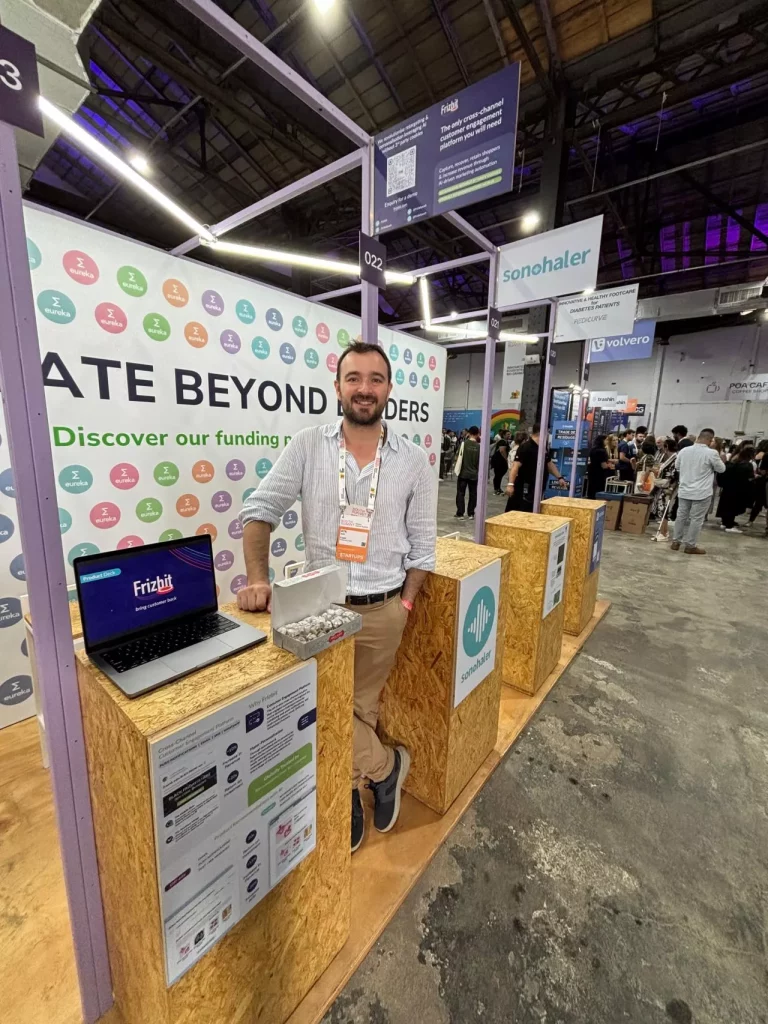
This was the fifth edition of the event at Cais Mauá, and the scale was remarkable: more than 24,000 visitors from 70 countries, over 3,000 startups, 800+ speakers. Porto Alegre as an innovation hub is not a story you can dismiss anymore.
The theme this year was “Human by Design” — and I thought it was a notably more grounded framing than the AI-maximalism that dominated last year’s circuit. There was a visible shift in the startup pitch floor: fewer “we use AI for X” declarations, more demonstrations of real traction, retention metrics, and unit economics. The startups that impressed were the ones solving genuinely hard problems in sustainability, health tech, and financial inclusion — with AI as a tool, not as an identity.
A few recurring themes across the sessions that resonated with me:
- Agentic AI in enterprise workflows dominated the tech conversations — but with more skepticism than 12 months ago. The question has shifted from “what can AI agents do?” to “how do we govern what AI agents decide?”
- Latin America’s e-commerce and fintech infrastructure is maturing faster than most European observers realize. The combination of Pix (Brazil’s instant payment system), high mobile penetration, and young demographics makes it a genuinely compelling market.
- Sustainability as a commercial differentiator — particularly green hydrogen and climate tech — took up far more floor space than in previous editions, reflecting both investor appetite and the state government’s deliberate industrial strategy.
- Human-AI collaboration as a design principle: less “replace the human,” more “augment the team” — a framing that I think is both more realistic and more commercially sound.
It was a great few days. If you’re thinking about expanding into LatAm or simply want to understand where a significant portion of the global startup ecosystem is heading — South Summit Brasil belongs on your radar. However, I have to admit that the conference was mainly Portuguese-speaking and if you don’t speak any Portuguese or Spanish, you might get less out of it.
📅 Upcoming Dates — April 2026
- April 14 — Apple Business platform launches globally (get your listing optimized before Apple Maps ads go live)
- April 14 — HubSpot Breeze AI outcome-based pricing takes effect for Breeze agents
- April 2026 — OpenAI self-serve advertiser tools for ChatGPT ads expected to open (no fixed date confirmed yet — watch your inbox)
- April 22 — GLOBALS On Tour Americas continues in Miami (startup & investor networking circuit)
- April 26 — Sora AI video app consumer shutdown (API stays live until September 24)
- April/May — Google Marketing Live expected (unconfirmed — typically Q2)
- Ongoing — EU AI Act trilogue negotiations between Council and Parliament begin
- Ongoing — Monitor your GA4 and Search Console data weekly through mid-April as the March Core Update completes its rollout
👋 That’s a Wrap on March
March was one of those months that aged differently as it unfolded. What started with a Google Core Update and a spam update became a month of genuine structural shifts — in how search works, how advertising is bought, how AI is governed, and how platforms compete for creators, audiences, and advertiser budgets.
The thread connecting almost everything this month? Speed. Google’s spam update completed in under 24 hours. OpenAI’s ad pilot crossed $100M ARR in six weeks. Meta integrated a $2B acquisition in seven weeks. The pace of change is not slowing down, and “monitoring the space” is no longer a passive activity.
As always, I’d love to hear what caught your eye this month — or what I missed. Hit reply, drop a comment, or find me on LinkedIn.
If you found this useful, share it with a colleague who’s trying to make sense of it all. And if you received this forwarded and want on the list — you know what to do.
Until next month. 👋
📩 Want to see how you can recover your lost sales at your online business through Marketing Automation? Book a free demo with Frizbit and let’s explore it together.