Hey there,
I hope your Black Friday and Cyber Monday campaigns crushed it—and more importantly, I hope you actually made profit, not just revenue.
November was intense. While Barcelona finally dipped below 5°C some nights (yes, we were freezing by our standards 🥶), the digital marketing world absolutely exploded with changes that’ll reshape how we work in 2026 and beyond.
Between Black Friday prep, year-end planning, and tracking all these announcements, I barely had time to enjoy my cortado. But here’s what you absolutely need to know from last month—the updates that’ll actually impact your strategy, not just your LinkedIn feed. And yes, I’m adding some critical perspective because not everything that glitters is gold.
Let’s dive in.
1️⃣ Search Marketing
Google Launches Gemini 3 and Integrates It Into Search
Google unveiled Gemini 3, its most advanced AI model yet, and deployed it into AI Mode in Search on launch day—a first for the company. The model brings state-of-the-art reasoning, enhanced multimodal understanding, and generative UI capabilities that create dynamic, interactive experiences directly within search results.
💡 Why it matters: This isn’t just another model update—it’s Google fundamentally reimagining search as a conversational, generative experience. Traditional SERP optimization is becoming less relevant as AI Mode creates custom interfaces for each query. If you’re still optimizing purely for position 1-3, you’re already behind.
🚀 Takeaway: Start monitoring how your brand appears in AI Mode responses (if you have access). Test queries related to your products/services and see what information Gemini pulls. Focus on structured data, authoritative content, and ensuring your brand narrative is consistent across all touchpoints—because that’s what AI will synthesize.
Source: Google – The Keyword
ChatGPT and Perplexity Launch AI Shopping Assistants for Black Friday
OpenAI introduced “Shopping Research” in ChatGPT, transforming it into a personalized product researcher with conversational queries and upcoming Instant Checkout integration. Simultaneously, Perplexity launched free AI-powered shopping in the U.S. with PayPal-integrated checkout and partnerships with merchants like Fabletics and Newegg.
I personally tested ChatGPT’s AI shopping assistant during my Black Friday shopping and it is quite impressive. Even though it was not able to find the cheapest prices (at least in my case in Spain, I still needed to use Google Shopping and some price comparison websites), it works very well for finding the models according to your criteria (and even helps you discover your criteria).
P.S. Yeah, in the end I bought some sports shoes or winter jackets…
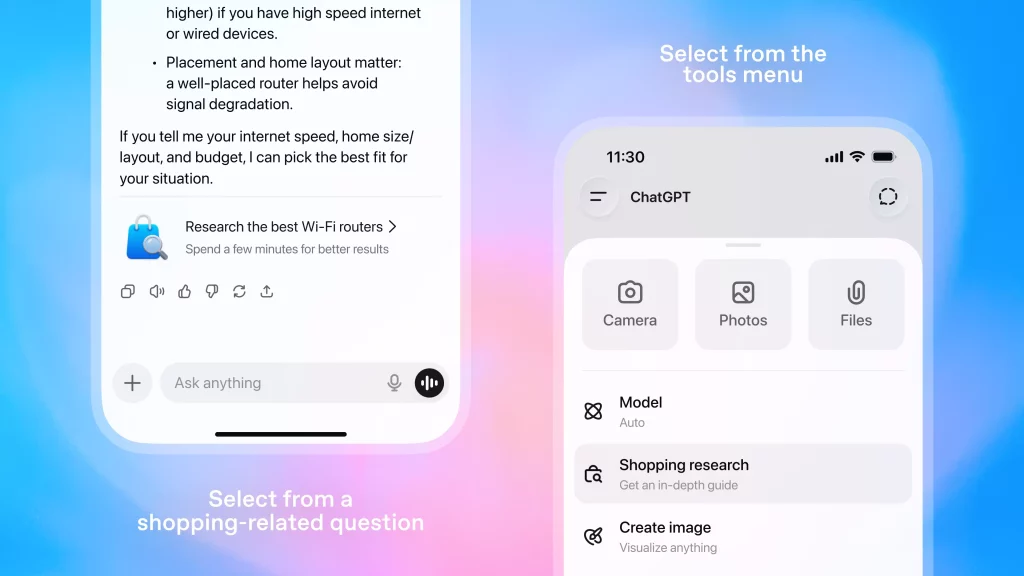
💡 Why it matters: This is the existential threat to Google Shopping I’ve been talking about. Why click through 10 product pages when ChatGPT can research, compare, and recommend in one conversation? For e-commerce brands, the game is shifting from “rank high in search” to “be recommended by AI.” That’s a completely different optimization problem.
🚀 Takeaway: If you’re in e-commerce, get your product data clean and comprehensive NOW. AI shopping assistants pull from multiple sources—your own site, reviews, specs, comparisons. The brands that win will have the most complete, accurate, and compelling product information across the web. Also, explore becoming a direct merchant partner with these platforms if your scale supports it.
Source: OpenAI
Google Performance Max Adds Waze Integration and Channel Reporting Transparency
Google announced two major Performance Max updates: integration with Waze for U.S. store goals campaigns (reaching 150M+ active drivers) and expanded channel performance reporting across all PMax campaigns. Advertisers now get visibility into where ads run across YouTube, Display, Search, Discover, Gmail, and Maps.
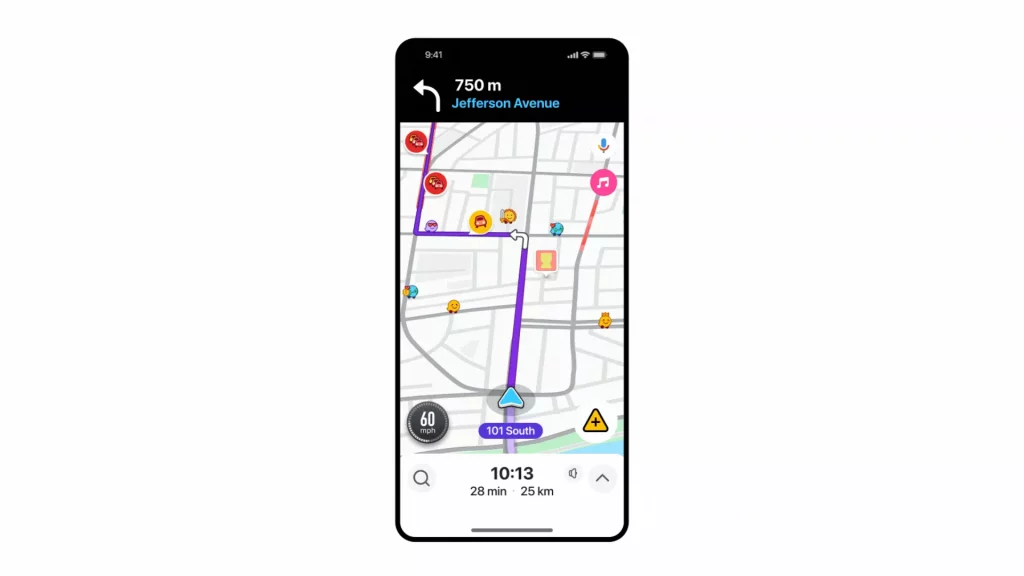
💡 Why it matters: Finally! The channel reporting transparency addresses PMax’s biggest criticism—that “black box” feeling. Knowing which channels actually drive conversions lets us make informed budget decisions instead of just trusting Google’s algorithm blindfolded. The Waze integration is massive for any business with physical locations—you’re literally reaching people while they’re navigating toward competitors (especially in the US).
🚀 Takeaway: Immediately audit your PMax reporting to see which channels are actually performing. You might discover that 80% of your conversions come from YouTube and 5% from Search—which should dramatically shift your creative and landing page strategy. For local businesses, test Waze integration ASAP before your competition does.
Source: Google Ads Help
Google Search Console Adds AI-Powered Branded Queries Filter
Google introduced an AI-assisted branded queries filter in Search Console that automatically distinguishes branded from non-branded search traffic without requiring manual regex patterns. The filter intelligently identifies brand names across languages and common typos, with a new Insights card displaying the breakdown.
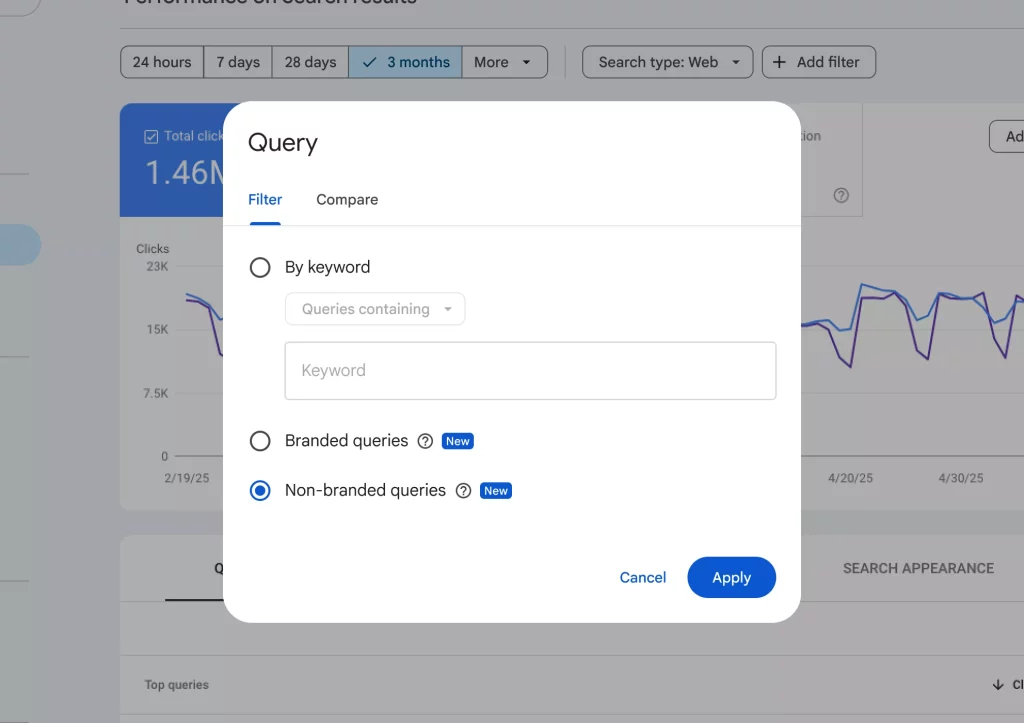
💡 Why it matters: This is quietly one of the most valuable SEO tools Google has released in years. Finally, we can accurately measure organic performance separate from brand equity. When you see “organic traffic up 30%,” you can now answer the critical question: “Is that because our SEO is working or because we spent €500K on brand campaigns?”
🚀 Takeaway: Set this up immediately in Search Console and establish your baseline metrics for branded vs. non-branded traffic. This data is crucial for properly attributing ROI between brand awareness campaigns and performance SEO. It’ll also help you identify when competitors start bidding on your brand terms (sudden branded traffic drop = someone’s stealing your clicks).
Source: Google Search Central Blog
Microsoft Reveals AI Search Drives 76% Higher Conversion Rates
Microsoft published research showing Copilot-assisted customer journeys are 33% shorter on average than traditional search, with high-intent conversion rates 76% higher for AI-powered experiences. Copilot sessions show a 22% increase in unique chat turns per session, reflecting evolution from single queries to ongoing conversations.
💡 Why it matters: This is the data point that should get every CMO’s attention. A 76% higher conversion rate isn’t incremental—it’s game-changing. Microsoft is basically saying “AI search doesn’t just change discovery, it fundamentally improves commercial outcomes.” The implication? Ignoring AI search optimization means leaving 76% of potential revenue on the table.
🚀 Takeaway: If you’re not already testing Bing/Copilot visibility, start now. While the volume is smaller than Google, the quality might be significantly better. Also, rethink your measurement framework—traditional metrics like impressions and CTR matter less in conversational search. Focus on “influence” metrics like citation frequency, conversation continuation, and purchase assists.
Source: Bing Blogs (Microsoft)
Google Demand Gen Gets November Updates with AI Creative Enhancements
Google released new Demand Gen features for the holiday season, with advertisers seeing an average 20%+ increase in conversions across 100+ launches in H1 2025. New capabilities include AI Image and Video Enhancements for automatic ad optimization, Pathmatics integration for importing top-performing creative from competitor platforms, and Asset Uplift A/B Experiments.
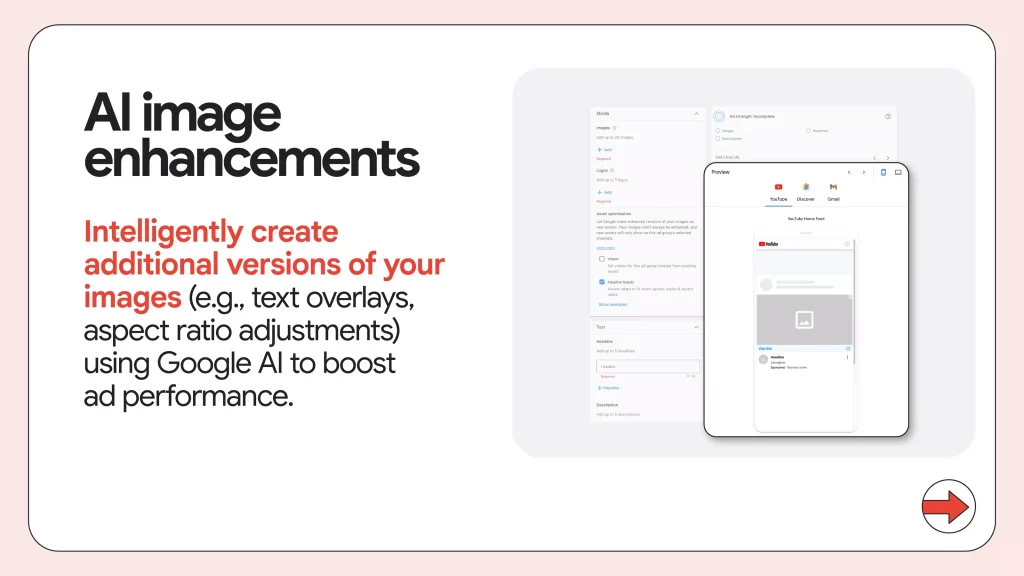
💡 Why it matters: The 20%+ conversion lift validates Demand Gen as a serious upper-funnel channel, not just an awareness play. The Pathmatics integration is particularly clever—Google is basically saying “show us your competitors’ best ads and we’ll help you create better versions.” That’s competitive intelligence built directly into the platform.
🚀 Takeaway: If you haven’t tested Demand Gen yet, the holiday performance data makes a strong case for Q1 pilots. The AI creative optimization can significantly reduce production costs while maintaining (or improving) performance. Also, use Pathmatics to analyze what creative approaches are working in your category—then let Google’s AI iterate on those patterns.
Source: Google – The Keyword
2️⃣ Marketing Technology
Salesforce Completes $8 Billion Informatica Acquisition to Fuel Agentforce
Salesforce finalized its $8 billion acquisition of enterprise data management leader Informatica. The deal brings comprehensive data catalog, integration, governance, quality, and Master Data Management capabilities to Salesforce. CEO Marc Benioff stated this creates a unified data foundation for Agentforce, enabling AI agents to “operate safely, responsibly, and at scale across the modern enterprise.”
💡 Why it matters: This is Salesforce’s most strategic acquisition in years—not because of Informatica’s revenue, but because of what it promises to enable. AI agents are only as good as the data they can access, and Informatica is world-class at data management. But here’s my concern: Salesforce has a… let’s call it mixed track record with acquisitions. Remember Tableau? Still feels bolted-on rather than integrated. MuleSoft? Getting there, slowly. Slack? Jury’s still out. The vision is brilliant, but execution is everything. I’m skeptical they’ll seamlessly integrate Informatica’s complex enterprise data infrastructure into Salesforce’s ecosystem without 2-3 years of “integration roadmap” announcements.
🚀 Takeaway: If you’re on Salesforce, temper your expectations for immediate magic. This integration will probably take some time. The real winners will be existing Informatica customers who get Salesforce features, not vice versa (at least initially). If you’re NOT on Salesforce, ask your current platform vendor what their data unification strategy looks like. “We have an API” isn’t going to cut it anymore.
Source: Salesforce Newsroom
OpenAI Partners with Target for AI-Powered Retail Experience
OpenAI announced a partnership with Target to launch a Target app within ChatGPT, allowing customers to get personalized recommendations, add items to multi-item baskets, and complete checkout using Drive Up, Order Pickup, or shipping options. Target joins over 1 million businesses now using OpenAI models, with 18,000 employees already using ChatGPT Enterprise internally.
💡 Why it matters: Target didn’t just integrate with ChatGPT—they built an entire shopping experience inside the chat interface. This is the future: commerce happening where conversations happen, not on traditional e-commerce sites. If Target (historically risk-averse on tech) is betting this heavily on conversational commerce, it’s not experimental anymore—it’s strategic.
🚀 Takeaway: Start mapping your customer journey through a conversational lens. What if users never visited your website but completed entire purchases through chat? What product information, FAQs, and purchase paths would they need accessible through natural language? Even if you can’t build a ChatGPT integration yet, this exercise will reveal gaps in your information architecture and customer data.
Source: OpenAI
3️⃣ Social Media Marketing
Meta Unveils GEM, the Largest AI Model for Ad Recommendations
Meta officially unveiled its Generative Ads Recommendation Model (GEM), which according to their announcement is the largest foundation model for recommendation systems in the industry. The model reportedly delivers a 5% increase in ad conversions on Instagram and a 3% increase on Facebook Feed, while being 4x more efficient at driving performance gains compared to Meta’s original ad ranking models.
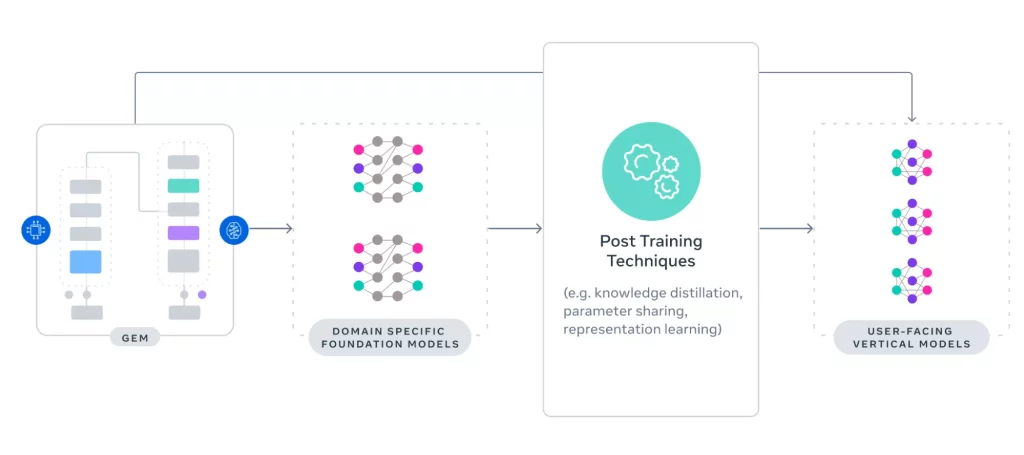
💡 Why it matters: According to Meta’s numbers, a 5% conversion lift across Instagram’s entire ad ecosystem translates to billions in additional advertiser value—and that efficiency compounds over time. If these numbers hold up in the real world (and that’s a meaningful “if”), this represents Meta rebuilding its advertising infrastructure from the ground up using generative AI. Every advertiser gets better performance without changing anything. That’s a massive competitive moat against TikTok and other platforms still using traditional recommendation systems. But let’s be honest: Meta has announced “revolutionary” ad improvements before, and results vary wildly by vertical and account maturity. I’d love to see independent verification of these claims.
On a side note—this is about ad recommendations. At Frizbit, we’ve been using AI for on-site product recommendations (not ads) for years, helping e-commerce sites personalize the shopping experience for each visitor. Different use case, different value proposition—one monetizes attention, the other optimizes customer experience and conversion. Both matter, but they’re not competing approaches.
🚀 Takeaway: If you’ve paused or reduced Meta spending due to iOS14+ performance issues, it’s time to retest with fresh campaigns. GEM could represent a genuine step-function improvement in algorithmic performance. Run controlled experiments comparing your pre-November and post-November campaign efficiency—you might be surprised. Also, lean harder into Meta’s automated bidding and creative optimization, as GEM makes these features significantly more effective. But measure ruthlessly—don’t just trust Meta’s press releases.
Source: Engineering at Meta
Meta Will Use AI Conversations for Ad Targeting Starting December 16
Meta announced that starting December 16, 2025, user interactions with Meta AI will be used to personalize content and ads across Facebook, Instagram, and WhatsApp. Users cannot opt out of this change. Conversations about sensitive topics won’t be used for targeting. This policy excludes users in the EU, UK, and South Korea due to regulatory restrictions.
💡 Why it matters: This is simultaneously brilliant from a targeting perspective and deeply concerning from a privacy standpoint. Meta is turning every conversation with their AI into targeting signals—understanding intent, interests, and purchase consideration in ways traditional behavior tracking never could. “I’m looking for a new camera for my upcoming trip to Iceland” is infinitely more valuable than “clicked on 3 camera ads.”
But let’s talk about the elephant in the room: you can’t opt out. Meta is essentially saying “use our AI, surrender your conversational data for advertising, or don’t use our AI at all.” That’s not consent—that’s coercion. The fact that EU, UK, and South Korea users are excluded tells you everything about whether this would pass regulatory scrutiny in privacy-forward jurisdictions. For the rest of the world, Meta is betting that convenience trumps privacy concerns. They’re probably right, but that doesn’t make it ethical.
From a pure marketing effectiveness standpoint, this is the most valuable first-party data source created since cookies. But we should be honest about the trade-offs users are being forced to make.
🚀 Takeaway: Starting mid-December, expect Meta’s targeting to get significantly more accurate at understanding user intent—at least outside Europe. This means your creative needs to be even more specific and relevant, as the algorithm will be matching precise intent with precise creative. Generic ads will perform worse. Also, consider how users might phrase their needs conversationally and ensure your product messaging aligns with natural language descriptions, not just keyword strings. And maybe, just maybe, we should think about whether we’re comfortable with this level of surveillance capitalism, even if it makes our jobs easier.
Source: TechCrunch
4️⃣ Emerging Tech & Data Privacy
EU Publishes Digital Omnibus with Major GDPR, AI Act, and Cookie Rule Reforms
The European Commission released its Digital Omnibus Package proposing the most significant changes to EU digital laws since GDPR’s 2018 implementation. Key proposals include narrowing the GDPR definition of personal data, allowing legitimate interest as a legal basis for AI training, extending data breach reporting deadlines from 72 to 96 hours, and relaxing cookie consent requirements for audience measurement and security purposes.
Also this proposes allowing any GDPR-compliant legal basis for cookie tracking, including legitimate interest, instead of requiring prior consent. This would shift cookies from an opt-in to an opt-out model. Aggregated audience measurement and security cookies could be used without consent banners as long as no personal profiles are created.
💡 Why it matters: This is the biggest regulatory shift for digital marketing since GDPR launched. The EU is essentially admitting that the current framework is too strict and is killing European digital innovation. Relaxing cookie consent requirements alone could restore significant targeting capabilities that we lost in 2018. However, privacy advocates (including Max Schrems, no you didn’t guess right, he is not German, he is Austrian) are already mobilizing against these changes, so expect a multi-year battle before anything becomes law.
We’ve spent 7 years building “cookieless” solutions, and the EU might just… bring cookies back? The shift from opt-in to opt-out could restore 60-80% of the addressable audience we lost post-GDPR. But here’s the cynical take: this reeks of lobbying pressure from struggling European tech companies who can’t compete with US giants under current rules.
🚀 Takeaway: Don’t make major strategic decisions based on these proposals yet—they’re years from implementation and will be heavily amended. But DO start scenario planning: “What would our targeting and measurement strategy look like if legitimate interest becomes viable for cookies?” and “How would looser consent requirements change our conversion optimization approach?” Being prepared for regulatory shifts—in either direction—gives you a competitive advantage when changes actually happen.
Source: European Commission
OpenAI Releases GPT-5.1 with Enhanced Customization and Adaptive Reasoning
OpenAI released GPT-5.1, featuring adaptive reasoning that dynamically adjusts thinking time based on task complexity—making simpler tasks 88% faster while maintaining frontier intelligence on complex problems. The model includes improved conversational abilities, enhanced customization options with updated styles and tone controls, and new developer tools including apply_patch and shell capabilities.
💡 Why it matters: The 88% speed improvement for simple tasks makes AI content production economically viable at scale—what previously cost $0.50 per request now costs $0.06. That’s the difference between “we can AI-enhance some content” and “we can AI-generate/optimize everything.” The enhanced customization means you can fine-tune GPT-5.1 to match your brand voice so precisely that AI-generated content becomes indistinguishable from human-written content.
🚀 Takeaway: If you’re still manually writing product descriptions, ad copy variations, or email subject lines, you’re wasting resources. GPT-5.1’s speed and customization make these tasks automatable with quality that matches (or exceeds) junior copywriters. Invest in prompt engineering and brand voice training now—this skill will be as essential as SEO knowledge was in 2010. Build your brand voice profile, test extensively, and scale what works.
Source: OpenAI
EU Proposes Delay of High-Risk AI Act Rules Until 2027
As part of the Digital Omnibus, the EU proposed delaying the implementation of high-risk AI system rules from August 2026 to up to December 2027. This affects AI use in biometric identification, job recruitment, healthcare, credit assessments, and law enforcement. The Commission can advance the date once standards and guidance are ready.
💡 Why it matters: The EU just admitted they rushed the AI Act and don’t have implementable standards ready. This 18-month delay is both good news (more time to prepare) and concerning (regulatory uncertainty continues). For marketers using AI in recruitment marketing or credit-based targeting, this is breathing room—but don’t assume the final rules will be more lenient. They’re delaying to get it right, not to weaken protections.
🚀 Takeaway: Use this delay to audit your AI usage in marketing—particularly anything involving automated decision-making about individuals (recruitment ads, credit offers, risk-based pricing). Document your AI systems’ logic, data sources, and decision processes now. When regulations do kick in, the companies with proper documentation will adapt quickly; everyone else will scramble to achieve compliance under threat of massive fines.
Source: Reuters
White House Drafts Executive Order to Preempt State AI Laws
The White House prepared a draft Executive Order titled “Eliminating State Law Obstruction of National AI Policy” that would create an AI Litigation Task Force to challenge state AI regulations deemed unconstitutional or inconsistent with federal policy. The proposal has drawn bipartisan criticism from state attorneys general and hundreds of tech safety organizations.
💡 Why it matters: The US is heading toward a major constitutional battle over who controls AI regulation—federal government or individual states. For national marketers, federal preemption would be a godsend: one set of rules instead of 50 different state laws. But it would likely mean weaker consumer protections than states like California, Colorado, or Vermont would prefer. This is the tech industry lobby pushing hard for a permissive federal framework that blocks states from being more restrictive.
🚀 Takeaway: If you run national campaigns, follow this closely. Federal preemption would dramatically simplify compliance, but the uncertainty period (lawsuits, congressional fights) will be messy. In the meantime, design AI marketing systems that can be configured for different jurisdictions—build flexibility into your architecture so you can adapt whether we end up with federal preemption, a patchwork of state laws, or something in between.
Source: CNN
Anthropic Unveils Claude Opus 4.5 Following $350 Billion Valuation
Anthropic announced Claude Opus 4.5, claiming it as “the best model in the world for coding, agents, and computer use,” achieving state-of-the-art performance on SWE-bench Verified among frontier models. The model follows Anthropic’s massive $350 billion valuation driven by investments from Microsoft and Nvidia. Early testers report the model can complete tasks impossible for previous versions and handle ambiguity without hand-holding.
💡 Why it matters: Claude Opus 4.5’s superior coding and agent capabilities make it the preferred choice for technical marketing automation and complex workflow development. If GPT-5.1 is the content creator, Claude Opus 4.5 is the system builder—it can architect and implement sophisticated marketing automation that previously required engineering teams. The $350B valuation (higher than many Fortune 100 companies) shows enterprise AI isn’t experimental anymore—it’s strategic infrastructure.
🚀 Takeaway: For complex marketing workflows—like “analyze campaign performance across 15 platforms, identify underperforming segments, generate optimization recommendations, draft creative briefs, and create implementation tickets”—Claude Opus 4.5 can do in minutes what takes teams days. If you’re building custom marketing tools or automation, test Claude for the backend logic and GPT for customer-facing content. The combination is incredibly powerful.
Source: CNBC
📅 Upcoming Dates (December 2025 – January 2026)
- December 16 — Meta AI conversation targeting goes live (non-EU)
- December 26 – January 1 — Year-end holiday week (plan campaigns accordingly)
- January 7-10, 2026 — CES 2026, Las Vegas (major tech/martech announcements expected)
- January 21-24, 2026 — B2B Marketing Expo, London
- January 2026 — Google Privacy Sandbox API deprecation begins (Chrome 144-150)
📰 News from Frizbit
On the Frizbit side, November was huge for us. After a full year of preparation, integrations, testing, and probably too many late-night calls across time zones, we officially onboarded two new airline clients—one from Europe and one from the Middle East.
We also broke our own records in November: highest number events processed in a single day as we surpassed 50 million events in the same day, happened on 28th of November a.k.a. as Black Friday — all without a single downtime. When you’re handling millions of real-time interactions for travel and e-commerce clients during peak season, reliability isn’t optional. It’s the whole game.
Grateful to the entire Frizbit team for making this happen, and to our clients for trusting us with their most valuable asset: their customer relationships.
Onward to 2026. ✈️
🎯 Final Thoughts
November felt like the month where AI stopped being a marketing feature and became marketing infrastructure. From Salesforce’s $8B data play to Meta’s GEM model to every major platform launching AI agents, the message is clear: AI-native marketing isn’t the future—it’s now.
The most interesting pattern? The simultaneous AI acceleration and privacy regulation relaxation. Europe is quietly walking back GDPR strictness while platforms get dramatically smarter at targeting. We might be entering a strange era where technology enables hyper-personalization just as regulations start allowing it again. Whether that’s progress or dystopia depends on your perspective (and which side of the Atlantic you’re on).
📩 Want to see how this could work for your brand? Book a free demo with Frizbit and let’s explore it together.