I spent most of the month moving between coastal towns on the Aegean around Izmir just like many people in Europe left their offices for holiday. But the AI Act did not take holiday. On the second, the transparency rules under Article 50 became applicable, and a lot of marketing teams found out that a regime they had filed under “next year” had quietly started while the office was empty.
That is the shape of August. It was a slow month for the industry and a busy one for the rules, and the two things happened on top of each other. In the same four weeks that Article 50 kicked in and Anthropic started watermarking every word Claude writes, Google finished rolling out AI visibility reporting to every site owner on earth, Shopify said orders arriving from AI tools had tripled, and OpenAI opened its ad platform in 31 European markets. Constraint and opportunity landed in the same fortnight, and both of them are now on your Q4 plan whether you put them there or not.
Which brings me to the reason this issue matters more than a typical late-summer roundup. September is the month everyone in the northern hemisphere pretends to start fresh: new notebooks, new budgets, Black Friday suddenly twelve weeks out. Most of what follows is not a nice-to-know. Several items have dates attached, and a few of those dates are this month.
🔍 Search Marketing Updates
ChatGPT Ads are expanding to 31 European countries

OpenAI said on 18 August that ChatGPT Ads would open across 31 European markets, including Spain, Germany, France, Italy, Poland, the Benelux countries and Scandinavia, with the rollout starting on the 24th. Access runs through OpenAI’s ads team, agency partners and technology partners first, with self-serve Ads Manager following.
💡 Why it matters: A genuinely new paid channel just opened in every market most of us sell into, at the same time. That does not happen often. The last time a major surface came online this quickly, the people who got in during the awkward early phase, when reporting was thin and inventory was cheap, bought a year of learning that nobody else could buy later.
🚀 Takeaway: Ask your agency or your OpenAI contact for access this month and put a small test budget behind one product line you know converts, with conversion tracking wired up before the first euro goes out. Treat the first six weeks as data collection, not as a channel that has to pay back.
Source: Search Engine Land
Google Search Console AI performance reports and the generative AI control go global
On 31 August Google completed the worldwide rollout of Search Console’s generative AI performance reports, which show impressions from AI Overviews, AI Mode and generative AI features in Discover, split by page, country and date. The same release shipped the Search generative AI control, a property-level setting that lets you pull your content out of those three surfaces entirely.
💡 Why it matters: As I wrote last month, AI answers were already covering close to half of Google searches while the rest of us estimated our exposure with third-party tools. Now the exposure comes from Google directly, for free, for every property. The reports still withhold clicks, so you get presence without payoff, but presence measured by the source beats presence guessed by a vendor.
🚀 Takeaway: Pull the report for your top 50 revenue pages and compare AI impressions against classic Search impressions. Where AI impressions are high and clicks are flat, that page’s job has changed from earning a visit to being the answer, and its content should be rewritten to be quotable rather than merely rankable.
Source: Search Engine Land
Google sets the AI Max migration timeline for Search campaigns

Google published the schedule for force-migrating legacy Search structures into AI Max. Campaign-level broad match and standalone automatically created assets get auto-upgraded across September 2026, Dynamic Search Ads follow in February 2027, and the creation of new legacy setups was already blocked from 3 August.
💡 Why it matters: As I covered last month, AI Max had just reached Standard Shopping and the direction was obvious. What changed in August is that this stopped being a product you can decline. If you still run campaign-level broad match, your matching behaviour is being rewritten this month, on Google’s calendar, not yours.
🚀 Takeaway: Before the end of September, export your brand inclusion and exclusion lists and screenshot your current search term reports for every affected campaign. You will need that baseline to argue about what changed, and once the migration runs you cannot recreate it.
Source: Search Engine Land
Google’s August spam update hit rankings harder than usual

SE Ranking looked at 100,000 keywords and found the August 2026 spam update produced 82% more disruption than a comparable window without an update. Some 16.71% of URLs that had been sitting in the top 10 fell past position 100, against 9.2% in late July, and the volatility reached all 20 industries tracked.
💡 Why it matters: A spam update that pushes roughly one in six top-10 URLs out of the top 100 is not housekeeping. The worst-hit vertical was fashion and beauty at 85.55%, which is precisely where a great deal of ecommerce organic revenue lives, and the second was real estate. If your August organic numbers looked strange, this is probably why, and it was not your content team.
🚀 Takeaway: Segment your organic loss by landing page type before you touch anything. Spam updates hit thin, templated and syndicated pages hardest, so if your product detail pages held and your programmatic category pages collapsed, the fix is editorial depth on those templates, not a site-wide panic.
Source: Search Engine Land
Microsoft Advertising makes AI Max for Search generally available

Microsoft moved AI Max for Search into general availability worldwide on 31 August as an opt-in suite for existing Search campaigns, bundling broader search-term matching, automated text customisation and final URL expansion. Unlike Google, Microsoft is keeping it opt-in for both new and existing campaigns.
💡 Why it matters: Same feature name, same shape, opposite posture. Microsoft is letting you choose while Google migrates you, which accidentally makes Bing the better laboratory this quarter. You can watch what broad matching and URL expansion actually do to your query mix on a smaller account before the same mechanics arrive in your Google spend by default.
🚀 Takeaway: Turn AI Max on in one Microsoft Search campaign in September and keep a matched control campaign running untouched. The read you get there is the closest thing you will have to a preview of your own Google migration.
Source: Microsoft Advertising Blog
⚙️ Marketing Technology Updates
Salesforce and Anthropic announce Claudeforce
On 26 August, during its Q2 earnings call, Salesforce announced Claudeforce: an expanded partnership that exposes Salesforce data, workflows, business logic and governance to Claude so work can happen outside the Salesforce interface. It launches as Salesforce in Claude, a plugin with 37 prebuilt sales skills covering meeting prep, deal health checks and pipeline reviews, in pilot now with open beta expected this month.
💡 Why it matters: The largest CRM on the market has just conceded that its own UI is optional. That is a bigger statement than any feature on the roadmap. If the system of record becomes something you talk to rather than log into, then the value of your stack stops being the software you bought and starts being the quality of the data and the permissions sitting underneath it. Marketing, service and commerce skills are promised next, which is when this reaches most of us.
🚀 Takeaway: Go and look at what your CRM would actually say if an agent read it out loud this week. Field-level rot that a human tolerates, stale owners, empty close dates, three spellings of the same account name, becomes confidently wrong output the moment a model is doing the reading.
Source: Salesforce
Shopify says AI-driven traffic and orders both tripled
Shopify’s Q2 results on 5 August put revenue up 34% to $3.6bn and GMV up 32% to $116bn, and reported that both traffic and orders arriving from AI search tools tripled year over year. About half of AI-referred sessions land straight on a product page, and 75% of AI-attributed purchases fell outside the top 100 categories.
💡 Why it matters: This is the first merchant-side evidence at real scale that AI referrals buy rather than browse, and it points somewhere unexpected. The gains are concentrated in the long tail, which means the brands best placed to win here are the specific ones, not the big ones. Shopify was also careful to say classic search kept growing, so this is addition, not substitution, and anyone modelling AI search as a pure cannibalisation risk has the sign wrong.
🚀 Takeaway: If half of AI arrivals land on a product page with no category browsing behind them, that page has to carry the whole sale on its own. Audit your top sellers for the things a category page usually supplies: sizing and fit detail, comparison against your other models, shipping and returns in plain language, and real reviews above the fold.
Source: Shopify
Adobe makes Workfront AI Collaborators generally available
Adobe shipped AI Collaborators in Workfront on 14 August, giving an AI agent a permissioned seat in the work management system instead of leaving it in a side chat. The collaborator pulls the brief, brand guidelines and messaging pillars from the project, hands them to the agent, and returns the deliverable into the task queue for human sign-off, with agents built in Microsoft Copilot Studio, Claude and Writer all connectable.
💡 Why it matters: Almost every marketing team is already using AI in a window where nothing is logged, nothing is governed and the output arrives by copy and paste. Giving the agent an identity, a permission set and an audit trail is unglamorous, and it is exactly what stands between an experiment and something legal will let you run on customer-facing work. The interesting detail is that Adobe will host agents built on rival platforms, which tells you where it thinks the value sits.
🚀 Takeaway: Pick the one recurring deliverable your team produces from a repeatable brief, localisation is the obvious candidate, and route it through a governed agent with a named human approver. Measure the review time, not the generation time. Generation was never the bottleneck.
Source: Adobe
Snapchat opens its ad platform to third-party AI assistants
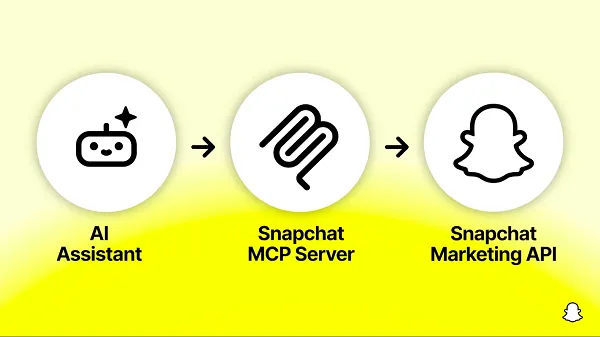
Snap launched a Snapchat Ads Model Context Protocol server on 4 August, letting advertisers connect Snap Ads API data to Claude, ChatGPT and Gemini for analysis and campaign guidance. Admins authorise each agent separately, and every connection is read-only for now, with write access promised later. Meta, TikTok and Pinterest had already shipped comparable connectors.
💡 Why it matters: Once four ad platforms speak the same protocol, cross-channel analysis stops being a spreadsheet job and becomes a question you ask in plain language. The read-only default is the part worth noting, because it tells you where the platforms think the risk is. Reading your account is a reporting feature. Writing to it is a different product, and it arrives the moment enough advertisers ask.
🚀 Takeaway: Connect the read-only servers you already have access to and use them for the analysis nobody has time for, like which creative concepts underperform on one platform and overperform on another. Then decide your policy on write access now, before somebody on your team grants it during a busy week in November.
Source: Social Media Today
📱 Social Media Marketing Updates
Meta agrees to pay up to $17.1 billion over teen safety claims

On 26 August Meta settled with 47 states, the District of Columbia and US territories over claims its platforms were designed to be compulsive for minors. It will pay at least $12.1bn across ten years, rising to $17.1bn if rival platforms adopt the same safeguards, and it accepted limits on how long teenagers can spend in its apps along with restrictions on engagement features regulators tied to mental health harm.
💡 Why it matters: The cheque is the headline and the product concessions are the story. Meta has agreed to cap the time a segment of its users can spend inside its apps, which means the platform is deliberately shrinking its own inventory. The escalator clause is cleverer still: five billion dollars is contingent on competitors matching the safeguards, which turns one settlement into pressure on every other feed.
🚀 Takeaway: If any part of your media plan reaches under-18s, model your reach on the assumption that teen time in Meta apps falls from here rather than holds. And read the product changes as a preview: engagement mechanics that a US settlement has now named are unlikely to survive untouched in Europe either.
Source: CNBC
Disney and TikTok sign a first-of-its-kind content-sharing deal
Announced on 5 August, the deal lets opted-in creators build short videos using material from Disney, Pixar, Marvel, Star Wars and FX, with a curated selection running both on TikTok and in the Verts feed inside Disney+. It is the first time TikTok content will be distributed on another company’s platform, piloting in the US with other markets intended to follow.
💡 Why it matters: A rights holder has handed its most protected assets to fans and then syndicated the results back into its own subscription product. That is a genuinely new answer to a question most brands still answer with a takedown notice. The economics are worth sitting with: Disney gets daily-habit content it does not have to commission, and creators get IP they could never license.
🚀 Takeaway: Make a list of the brand assets you currently police and ask which ones would work harder as raw material. You do not need Disney’s catalogue for this. Product footage, packaging, mascots and archive campaign material are all things your community would remix if you told them clearly that they were allowed to.
Source: The Walt Disney Company
YouTube doubles the entry bar for its Partner Program

From 1 February 2027, new channels applying to the YouTube Partner Program will need 8,000 qualified watch hours in 365 days or 20 million qualified Shorts views in 90 days, double the current thresholds. Announced on 10 August, the change leaves existing members untouched, and arrives alongside new Shorts ad formats that pay creators a 45% revenue share when an advertiser targets five or fewer channels.
💡 Why it matters: Doubling the bar thins the pool of monetised creators, which raises the price and reduces the supply of the small-channel partnerships that have quietly been the best value in influencer marketing. The five-channel targeting format is the more useful half though, because it is a native way to buy against a specific shortlist of creators rather than an interest category.
🚀 Takeaway: If you work with micro creators, lock your rates and renew your best relationships before February, because the ones who make it through the new gate will know their scarcity value. Then test the five-or-fewer-channel Shorts format against your usual paid partnership setup and compare cost per view honestly.
Source: Social Media Today
LinkedIn lets members report posts as AI slop
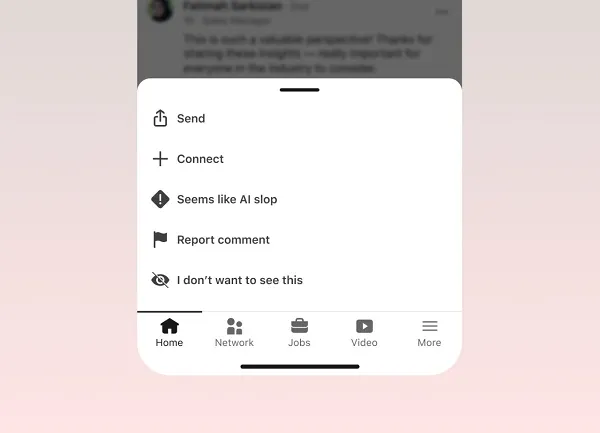
On 2 August LinkedIn began ramping a control that lets members privately flag posts and comments they believe are AI slop, with creators notified through their analytics when their content gets reported. The company is also retiring its own “enhance your post” rewriter in favour of a proofreading tool that leaves the author’s voice intact.
💡 Why it matters: LinkedIn killing its own AI writing feature while adding a report button for AI writing is about as clear a signal as a platform can send about what the feed will reward. For any B2B team running generated thought leadership at volume, this converts a taste problem into a distribution risk. And notifying creators when they get reported is the sharp bit: the feedback arrives privately, in your own analytics, where it is hard to argue with.
🚀 Takeaway: Keep using AI for research, outlines and editing, and stop using it for the final draft of anything posted under a person’s name. If you cannot tell which of your last ten posts were generated, your audience already can.
Source: Social Media Today
🔒 GPTs, Emerging Tech & Data & Privacy
EU AI Act transparency obligations take effect
Article 50 of the EU AI Act became applicable on 2 August. It requires disclosure when someone is interacting with an AI system, when emotion recognition or biometric categorisation is used on them, and when content has been generated or manipulated by AI. It applies to any system in scope, not only high-risk ones, and non-compliance carries fines up to €15 million or 3% of global turnover. Systems already on the market before 2 August have until 2 December to meet the machine-readable marking requirement.
💡 Why it matters: As I covered back in June, Europe published the rulebook for labelling AI content and the platforms spent July building to it. August is when it became law you can be fined under. The detail most marketing teams have missed is that Article 50 does not care whether your use is high-risk: a support chatbot and a generated product description both sit inside it.
🚀 Takeaway: Write down three things this month and keep them somewhere a lawyer can find them: where AI touches your customer-facing output, what you disclose in each of those places, and who owns the answer. Then put 2 December in the calendar for anything running on a model that shipped before August.
Source: European Commission
Anthropic starts watermarking Claude’s text output worldwide
On 11 August Anthropic said it would embed an imperceptible watermark in the text and files Claude produces, applied globally rather than only for European users, to meet Article 50’s marking rules. The signal survives copy and paste and is invisible in normal reading. Models launched from 2 August carry it at release, with older models covered by 2 December.
💡 Why it matters: A model provider chose to apply a European rule to every user on the planet instead of maintaining two versions of the product. That is the Brussels effect working in real time, and it has a practical consequence: marketing copy drafted in Claude now carries a detectable signal wherever in the world it gets published. Expect competitors to follow, and expect detection tooling to appear on the other side of it.
🚀 Takeaway: Assume anything a frontier model writes is now, or soon will be, machine-detectable, and build your process on that basis rather than on the hope that it is not. Practically: use the model for the draft, rewrite in your own words for anything that goes out under a byline, and stop treating “will anyone notice” as a strategy.
Source: Anthropic
Google launches Gemini 3.7 Flash at half the previous price

Google shipped Gemini 3.7 Flash on 13 August, three weeks after 3.6 Flash, at introductory pricing of $0.75 per million input tokens and $3.75 per million output tokens, half the previous model’s rate through 31 December 2026. Google claims it beats comparable Anthropic and OpenAI models across nine benchmarks, and it is already serving some AI Mode responses in Google Search.
💡 Why it matters: Model quality headlines are easy to ignore, but a halved price on a capable workhorse changes which automations survive a business case. Per-visitor personalisation, per-SKU copy generation and real-time support triage all have a cost per unit that either clears or does not, and a lot of ideas that failed at the old rate clear at this one. Note the expiry date though: pricing doubles on 1 January.
🚀 Takeaway: Take the automation you shelved this year because the per-request cost did not work and rerun the maths at the new rate. Then build the business case at the January price, not the introductory one, so you are not explaining a doubled bill in Q1.
Source: Google
OpenAI launches Private Safety Processing

On 19 August OpenAI introduced Private Safety Processing, a system that looks across multiple sessions for signs of misuse without human review of the underlying conversations. The company positioned it explicitly against Anthropic on enterprise privacy terms.
💡 Why it matters: Enterprise AI buying is increasingly decided by what the vendor cannot see rather than by what the model can do. That is a good development for anyone who has spent a quarter trying to get an AI workflow past their own legal team, because privacy guarantees are now a thing the labs compete on rather than a concession they make reluctantly. It also means the answers you got about data handling twelve months ago are out of date.
🚀 Takeaway: Re-ask the data questions on every AI tool in your stack this quarter, specifically what is retained, for how long, and who can read it. If your last review predates the summer, the vendor’s answer has probably improved and your policy has not caught up.
Source: TechCrunch
📅 Upcoming Dates
- 1 to 30 September: Google Ads auto-upgrades Search campaigns using campaign-level broad match or standalone automatically created assets into AI Max. Dynamic Search Ads follow in February 2027.
- Late September: Google Ads removes campaign-level language targeting from Search and AI Max for Search campaigns. Performance Max keeps language settings for YouTube, Display, Discover and Gmail, but not for Google Search placements.
- Through September: Google’s expanded Limited Ad Serving policy keeps rolling out across all Google Ads surfaces. Advertiser verification is the single biggest lever on which side of that line your account lands.
- September: Salesforce in Claude, the first Claudeforce release, expected to move from pilot into open beta.
- 16 to 18 September: UNBOUND by HubSpot, formerly INBOUND, in Boston. Already sold out.
- 17 September: Pinterest Presents, Pinterest’s annual advertiser showcase, online.
- 23 to 24 September: DMEXCO in Cologne, under the theme “Scaling Intelligence”, heavy on AI and retail media.
- 23 to 24 September: Meta Connect in Menlo Park. AI, wearables and smart glasses expected.
- 23 to 24 September: eCommerce Expo at ExCeL London, themed “Building Smarter Commerce”.
- 2 December: EU AI Act deadline for machine-readable marking on generative AI systems placed on the market before 2 August. Worth putting in the calendar now.
- 27 November: Black Friday. Which means the creative, consent and feed work happens in September, not November.
👋 Sign-off
August is usually the month where I struggle to fill this newsletter. Not this year. The rules moved while the industry was away, and September is going to feel like catching up on homework.
So tell me: which of these actually landed on your desk this month, and which one did I underweight? I am especially curious whether anyone has got into ChatGPT Ads in Europe yet, and what the early numbers look like. Reply and let me know. Back in Barcelona for the autumn, and glad to be.
Ata
📩 Want to see how you can recover your lost sales at your online business through Marketing Automation? Book a free demo with Frizbit and let’s explore it together.