May turned into one of the busiest months for marketing news I can remember, and most of it landed in a single week. Google Marketing Live and Google I/O ran back to back, and between them Google reworked large parts of how search, ads, and measurement are going to function from here. There were more Google announcements worth your time this month than in the last few issues combined, so the Search section below leans heavily that way. For once I think that is just an honest reflection of what happened.
Here in Barcelona, where the first real heat of the summer arrived this month, the same question kept coming up in every room I was in: what do we actually do with these AI agents now that they are sitting inside our tools? That question runs through almost everything below. Last month I wrote that Anthropic had shown its Mythos model and then deliberately chose not to release it; this month it raised money at a valuation that would have sounded made up a year ago and said Mythos is only weeks away. The pace is not letting up.
One honest word before we dive in. The easy mistake with all this automation is to hand over your judgment along with the busywork. Let the agents do the work, but keep deciding what the work is for.
🔍 Search Marketing Updates
Google Marketing Live 2026: Gemini rebuilds the ads stack

At Google Marketing Live on May 20, Google did not so much announce features as lay out a worldview: in the age of AI, the only way to compete is with AI. The whole ad stack is being reorganized around Gemini, with new formats built for AI Mode, a wider rollout of the Universal Commerce Protocol that, as I covered back in January, Google launched for AI-powered shopping, and creative automation that turns a brief into finished assets.
💡 Why it matters: Google is still the biggest demand engine most of us touch, so when it reframes campaigns as agent-driven rather than keyword-and-bid driven, that is less a roadmap than a deadline. The skills that defined a good PPC manager for fifteen years, like granular match types and manual bid sculpting, keep getting absorbed into the model.
🚀 Takeaway: Audit how much of your account already runs on automated bidding and broad match, then start treating your feed, your creative assets, and your conversion signals as the real levers. Those are the inputs the agent cannot fake for you.
Source: Google (The Keyword blog)
Google I/O 2026: AI Mode passes a billion users and Search Live goes mainstream

At I/O on May 19, Google revealed that AI Mode now has more than a billion monthly users, a year after its US launch, with query volumes more than doubling each quarter. Search Live, the real-time, multimodal conversation with Search that, as I covered in March, Google had already pushed out to more than 200 countries, now feels properly mainstream, and a set of background “information agents” were framed as the next phase.
💡 Why it matters: A billion users settles the question of whether generative search is a real channel. It is the channel now, and the behaviour is different. AI Mode queries run about three times longer than classic searches, and one in six is voice or image. Optimizing for ten-word keywords misses where the volume is heading.
🚀 Takeaway: Pull your Search Console data and look at the longer, question-shaped queries, then make sure your content answers them in clean, quotable chunks, with clear headers and the answer up top, so you are the source the model pulls from.
Source: Google (The Keyword blog)
Ads arrive inside Google AI Mode: Conversational Discovery and Highlighted Answers

Google introduced ad formats built specifically for AI Mode. Conversational Discovery ads surface as users ask follow-up questions, and Highlighted Answers attach to queries with commercial intent. The framing from Google’s ads team was blunt: now that you can ask Google anything, the best ads have to be answers.
💡 Why it matters: This is the moment paid search stops being a list of links and becomes part of the conversation. It is a genuine shift in what ad inventory even is, and an early-mover advantage for brands that learn the format before everyone bids the CPMs up.
🚀 Takeaway: Do not wait for a best-practices deck. Get into the beta wherever you can and start writing ad assets that read like helpful answers rather than slogans. The conversational surface punishes generic copy hard.
Source: Search Engine Land
Google May 2026 core update begins rolling out
On May 21, Google kicked off the May 2026 core update, the second of the year after March, describing it as a routine pass to better surface satisfying content, with a roughly two-week rollout that finished in early June.
💡 Why it matters: Core updates still move organic traffic at scale, and this one landed right as AI Overviews and AI Mode are eating clicks off the top of the page. If you are seeing volatility, it is worth separating real core-update impact from the simpler fact that AI is summarizing your content and the click never happens.
🚀 Takeaway: Do not knee-jerk rewrite everything. Wait for the rollout to settle, segment the damage by query type, and put your effort into pages where you genuinely add something a summary cannot, like original data, a real opinion, or first-hand experience.
Source: Search Engine Land
⚙️ Marketing Technology Updates
Klaviyo wires its data into Claude for agentic marketing workflows
On May 7, Klaviyo expanded its integration with Anthropic so that its Model Context Protocol server now works across Claude’s products, including Claude.ai and Claude Cowork. Marketers can pull campaign reports, query flows, and look up profiles conversationally, and inside Cowork that same connection can run a multi-step job end to end, from reading the data to writing the brief and saving the file.
💡 Why it matters: For the many ecommerce teams who basically live inside Klaviyo, this turns your customer and performance data into something you can interrogate in plain language, and increasingly act on without clicking through dashboards. It is also more evidence that MCP is quietly becoming the connective tissue between your stack and the assistants you already use. Google previewed the same idea as WebMCP, which I wrote about in February, and TikTok and Meta have since wired it into ads.
🚀 Takeaway: If you run Klaviyo, connect it to Claude and start with the one recurring report you rebuild by hand every week. If the agent produces it reliably, you have just bought back hours. If it cannot, you have learned exactly where your data is messy, which is useful on its own.
Source: Klaviyo
Meta opens its AI business assistant to all advertisers
The Manus-powered assistant that, as I noted back in March, Meta first folded into Ads Manager is now open to advertisers and agencies across the US, EMEA, APAC and Latin America, with local-language support. The numbers it shared are worth noting: roughly 10 million assistant conversations a week, early testers resolving account issues 20% more often, and small advertisers seeing a 12% drop in cost per result.
💡 Why it matters: This lowers the skill floor for running Meta ads, which is a clear win for small teams without a dedicated buyer. The flip side is the one we keep hitting this year: more of the real decisions move inside Meta’s automation, where your job shifts from operator to editor.
🚀 Takeaway: Let the assistant handle setup and troubleshooting, but hold the line on creative and audience strategy. The brands winning on Meta this year are the ones feeding it better inputs, not the ones handing it their judgment.
Source: Social Media Today
📱 Social Media Marketing Updates
TikTok World ’26: AI agents, Smart+ and brand-owned Search Hubs
At its annual TikTok World summit on May 13, TikTok went all in on agentic advertising. The headline for me was an Ads Model Context Protocol server that lets developers and agencies build their own AI agents directly on top of TikTok’s ad platform, alongside Smart+ automation, brand-owned Search Hubs, and the Dreamina Seedance 2.0 creative model.
💡 Why it matters: An open MCP server for an ad platform is a real first. It means your agency could wire a custom agent straight into campaign management instead of clicking through Ads Manager, which is a glimpse of where every platform is going. The Search Hubs also confirm TikTok is now a search engine for a big slice of younger buyers.
🚀 Takeaway: If you sell to people under 35, treat TikTok search as seriously as Google. Claim and optimize a Search Hub, and brief your team, or your tools, on what an MCP-connected workflow could automate before your competitors get there first.
Source: TikTok Newsroom
Meta launches Instagram, Facebook and WhatsApp subscriptions, with AI plans coming

On May 27, Meta officially rolled out paid subscriptions across Instagram, Facebook and WhatsApp, with more tiers and AI features signalled. Most observers read it as a way to help offset Meta’s enormous AI infrastructure bill.
💡 Why it matters: If a meaningful share of users go ad-free, your addressable reach on Meta could quietly split into ad-supported and paid cohorts, and the ad-supported pool may skew differently from the audience assumptions you have trusted for years. That math deserves a fresh look.
🚀 Takeaway: Watch your frequency and reach curves over the next two quarters. If paid tiers thin out a segment you depend on, lean harder into owned channels like email, push and WhatsApp utility, so you are not renting all of your reach.
Source: TechCrunch
🔒 GPTs, Emerging Tech & Data & Privacy
OpenAI makes GPT-5.5 Instant the default ChatGPT model

On May 5, OpenAI shipped GPT-5.5 Instant as the new default across every ChatGPT tier, replacing GPT-5.3 Instant. The headline claim was a 52.5% reduction in hallucinated answers on high-stakes prompts, plus deeper personalization from past chats and connected apps. The GPT-5.5 launch I covered last month is now simply what everyone gets by default.
💡 Why it matters: ChatGPT’s default is the surface that hundreds of millions of people use daily, including to research products and brands. Fewer hallucinations means the model is more confident about what it says about you, which makes how your brand shows up in AI answers a real reputation surface rather than a curiosity.
🚀 Takeaway: Run your brand, your key products, and your own name through ChatGPT this week. If the default model gets facts wrong, that is now a measurable share of your audience seeing it, so fix the public sources it is drawing from.
Source: TechCrunch
Anthropic hits a record $965B valuation and ships Claude Opus 4.8
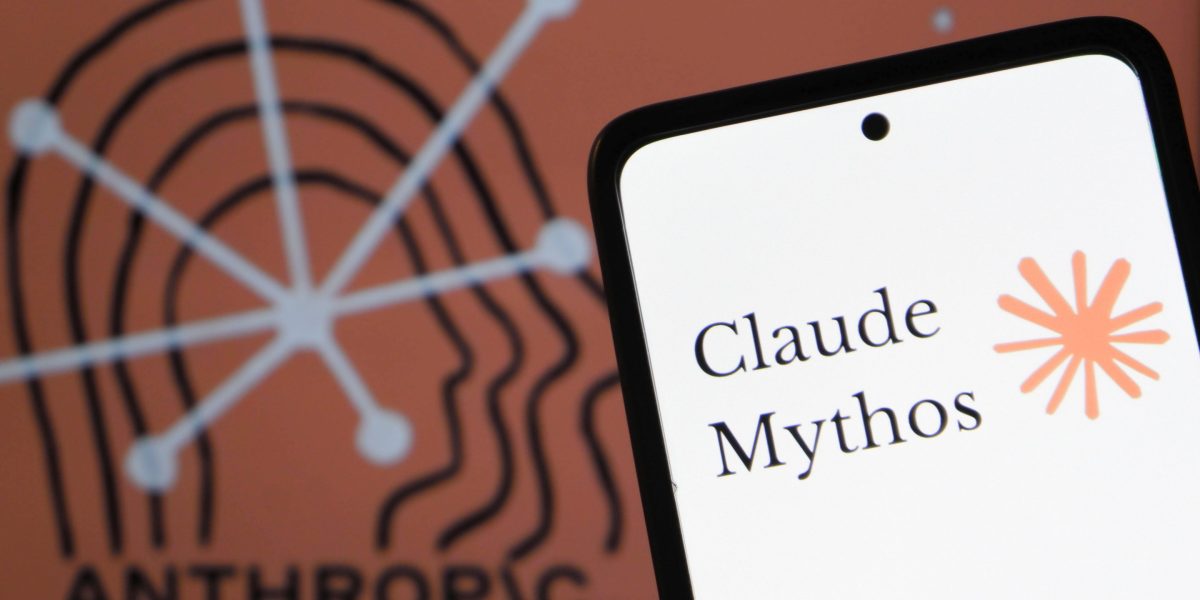
On May 29, Anthropic raised $65B at a $965B valuation, passing the $852B mark that, as I reported in March, OpenAI had set, with an annualized revenue run rate north of $47B. It shipped Claude Opus 4.8 alongside the news and said a Mythos-class model is coming within weeks, the same model it had shown and held back a month earlier.
💡 Why it matters: The two-horse race between Anthropic and OpenAI sets the pace, the pricing, and the capability of the AI tools the rest of us build on. Record raises mean faster model cycles and more capable agents, which is great for what you can build and a reminder to design for a world where these capabilities keep doubling on a short clock.
🚀 Takeaway: Do not hard-wire your workflows to one model’s quirks. Build your AI processes, whether for content, support, or analysis, so you can swap the underlying model as the leaders leapfrog each other. They will, repeatedly.
Source: Fortune
EU agrees to simplify and streamline the AI Act (the ‘AI omnibus’)
On May 7, the Council and European Parliament reached a political agreement to simplify parts of the AI Act and related digital rules, easing implementation burdens and aligning incident-reporting and breach-notification requirements across regulations. This is the streamlining I wrote about back in March, when the Council and Parliament both adopted their positions, and last month I flagged the August high-risk deadline and said not to wait around for a deferral. This month it became a political agreement.
💡 Why it matters: After years of Europe setting the strictest bar in the world, this is a real reduction in friction for marketers deploying AI tooling in the EU. It is pragmatic, though it is worth watching that “simplification” does not quietly become “deregulation” in areas like profiling and automated decisioning that touch our work directly.
🚀 Takeaway: If EU compliance worries have been parking your AI personalization projects, revisit them with your DPO this quarter. The friction is dropping, and being early but compliant beats being late.
Source: European Council (Consilium)
European Commission publishes draft guidelines on high-risk AI classification
On May 19, the Commission released draft guidelines clarifying how to classify high-risk AI systems under Article 6 of the AI Act, with practical examples of what does and does not qualify, and opened a public consultation that runs until June 23.
💡 Why it matters: Most marketing AI will not be “high-risk,” but the line matters, because certain profiling and automated-decision use cases can cross it. Clearer examples give teams the certainty to green-light projects that were previously stuck in legal limbo.
🚀 Takeaway: Map your AI use cases against the draft examples now, while the consultation is open. If a tool you rely on sits near the high-risk line, build the obligations into your roadmap rather than discovering them later.
Source: European Commission (Shaping Europe’s digital future)
🧰 Tool of the Month: Wispr Flow
I found this one the hard way. I have been dealing with tendonitis, and the last thing my hands needed was more hours on the keyboard, so I went looking for a way to get words onto the screen without typing every one of them. Wispr Flow is voice to text that genuinely keeps up: you talk, and it drops clean, punctuated text into whatever app you are in. I use it in VS Code to direct AI, for my emails, and even for longer WhatsApp messages. We can speak roughly five times faster than we type, and thanks to the latest AI models the transcription is finally accurate enough to trust without constant corrections. There are good competitors too, so shop around, but the bigger point is that this is a genuinely good moment to start dictating instead of typing. If you want to try it, here is my referral link.
🚀 News from Frizbit
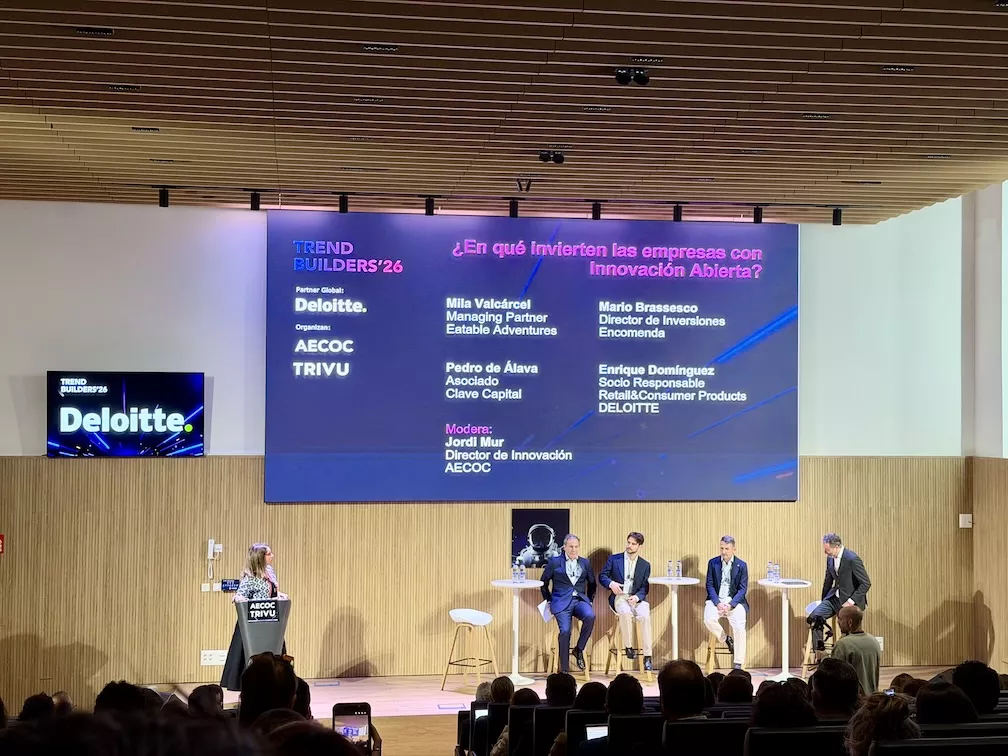
No big product launch from us this month, so instead a couple of notes on where Frizbit has been. On May 21 I spent the day at AECOC’s Trend Builders here in Barcelona, the annual innovation gathering for retail and consumer goods. The agenda was basically one long version of this month’s theme: AI-native commerce, what open innovation between big corporates and startups actually looks like in practice, and a run of foodtech and sustainability startups pitching from the stage. Sitting in a room with people from the major retailers, the mood was less hype and more “fine, but where does this genuinely pay off,” which is exactly the right question to be asking right now.
I was also signed up for the EU-Startups Summit in Malta on May 7 and 8, two days in Valletta that pull together a few thousand founders, investors and operators from across Europe. It is one of the sharper rooms on the continent for honest conversations about what is moving the needle in growth, and a good reminder that Frizbit lives inside that wider startup world, not only the marketing one. If you were at either event, I would love to compare notes.
📅 Upcoming Dates
- June 3 to 4: DigiMarCon Southeast, Atlanta
- June 8 to 10: Gartner Marketing Symposium/Xpo, Denver
- June 15 to 16: Digital Summit Denver
- June 16 to 17: Forrester CX Forum, New York City
- June 19 to 21: VidCon, Anaheim (creator economy)
- June 21 to 26: Cannes Lions International Festival of Creativity, France
- June 23: deadline for feedback on the EU’s draft high-risk AI classification guidelines
- Through June: aftermath of Google’s May 2026 core update, so expect continued ranking volatility
👋 Sign-off
That was May. If there is a single thread, it is that the agents are no longer on their way; they are already sitting inside your ad accounts, your analytics, and your customers’ search bars. The opportunity is enormous, and so is the temptation to give away your judgment along with the busywork. My advice, as always, is to take the leverage and keep your hands on the wheel.
What landed hardest for you this month, and what did I miss? Hit reply and tell me, I read every one.
Until next month,
Ata
Co-Founder & CEO, Frizbit, Barcelona
📩 Want to see how you can recover your lost sales at your online business through Marketing Automation? Book a free demo with Frizbit and let’s explore it together.