Barcelona has finally turned autumnal: a jacket in the morning, still enough sun at lunch to sit outside. Down in Catalunya Square, the tents of the housing encampment have been up since the end of September. Vandalism and Halloween have been and gone, and the shop windows have already moved on to Singles’ Day and Black Friday. For most of you reading this, the next four weeks are the year.
As I wrote last month, September was when AI got a price list. October is when the first results came back, and they were not flattering. Alphabet told investors that AI Mode earns less than classic search, Search growth slid to 12%, and the stock had its worst day since the 2004 IPO. An independent paper found a ChatGPT ad visit earned about a third of what a paid Google visit does. Another analysis put ChatGPT’s traffic at under 1% of Google’s organic traffic. None of this means AI search is overhyped as a behaviour. It means the money has not caught up with the behaviour yet, and that gap explains most of what follows.
It also explains the other story of the month: the buyers came out. Salesforce is taking Braze, DoorDash is taking Instacart, and if you hold a contract with either, your 2027 plan just got a new question in it. Let’s get into it.
🔍 Search Marketing Updates
Google’s search growth slowed to 12%, and it took AI Mode ads to 10 more countries the same day

On 28 October Google expanded ads in AI Mode to Australia, Canada, India, Kenya, Malaysia, New Zealand, Nigeria, Pakistan, the Philippines and Singapore, with Brazil, Mexico and the UK planned for Q4, and launched multiturn ads in the US, which appear on follow-up questions. That same day Alphabet reported Search revenue growth of 12%, down from 19% in Q1 and 17% in Q2, with Philipp Schindler pointing to lower monetization in AI Mode. The shares fell roughly 13%.
💡 Why it matters: Those two announcements are one story. Google has now said publicly that its fastest-growing search surface earns less, so expect more ad formats there, and quickly. Google’s line that sponsored and organic product listings already get similar click-through rates comes from its own US data over two weeks, so treat it as a claim rather than a benchmark. Spain is not on the list yet, but the UK is a short step away.
🚀 Takeaway: Multiturn ads reward products that make sense several questions into a conversation. Rewrite your feed titles and descriptions around the follow-up questions shoppers actually ask (fit, compatibility, delivery), and get that done before the UK rollout if you sell there.
Source: Google Ads & Commerce Blog, Search Engine Journal, AdExchanger
ChatGPT Ads reached 26 more countries, and the first independent numbers are awkward

OpenAI took ChatGPT Ads to 26 new countries, 14 of them in Latin America including Argentina, Chile and Colombia, and tested a more visual format beside image generation in the US. It says more than 100,000 advertisers have run ads, while a third-party count put active advertisers closer to 60,000 in early October. Then a working paper, still under review, found a US ChatGPT ad visit earned $0.89 against $2.45 for a paid Google visit, converting at 0.37% against 1.17%.
💡 Why it matters: As I wrote last month, Amazon plugging its advertisers into ChatGPT made this feel like retail media’s next shelf. The paper is the cold shower: 84 of 87 advertisers active on both channels earned less per ChatGPT visit, and it implies parity at around $0.26 a click. One advertiser made up 66% of purchases, so the sample is fragile, and OpenAI can point to individual wins. Still, it is the best public evidence we have, and it is not good.
🚀 Takeaway: If you are testing ChatGPT Ads, measure revenue per visit against paid search rather than CTR, and set your bid from that number. For LATAM brands, the entry is worth running as a cheap learning budget. It is not yet something to take from Google to fund.
Source: AdExchanger, Search Engine Journal
ChatGPT sends less than 1% of the traffic Google does
Marie Haynes analysed 100 sites and more than 145 million GA4 sessions, and found ChatGPT sent 0.62% as many sessions as Google organic. On the 55 sites tracking conversions, 13.8% of ChatGPT visitors converted against 3.02% from Google, yet Google organic still drove 27 times the conversions of all LLMs combined.
💡 Why it matters: Both camps will quote this, and each will quote half of it. The conversion rate is real enough to take seriously, and the volume is small enough to stop anyone rebuilding a content strategy around it. The study did not state its dates, industry mix or how conversions were defined, so use it as a sanity check rather than a forecast. Also remember that referrals only count the people who click, and a recommendation can change a purchase without ever appearing in GA4.
🚀 Takeaway: Build one GA4 channel group for LLM referrals if you do not have one, then compare your own volume and conversion rate with these figures. Size your AI visibility budget from your numbers, not from a conference slide.
Source: MarTech
Google opened Connected Apps for AI Mode and Gemini
Google announced a Connected Apps Platform that lets approved developers run apps inside AI Mode and the Gemini app, mainly through a remote MCP server. It is live in Search in the US and in English, with Instacart and Canva among the names, and more than 50 apps launched across Search and Gemini.
💡 Why it matters: As I covered last month, OpenAI opened ChatGPT to full apps, and I said those surfaces would develop their own discovery rules. Google has already written one: its policy bans overly broad or deceptive capability descriptions written to win selection. That tells you people are expected to try exactly that. It is very early, and Google’s own John Mueller said as much, but a capability description is now a thing someone will have to optimise.
🚀 Takeaway: If you run a store locator, configurator or loyalty tool, write one honest paragraph on what it does and when an assistant should call it. You will need that paragraph for every platform of this kind, so it is worth writing now.
Source: Search Engine Journal
⚙️ Marketing Technology Updates
Salesforce is buying Braze for $5.66 billion
Salesforce signed an agreement to acquire Braze for about $5.66 billion in enterprise value, at $47.50 a share in cash, with close expected in its fiscal 2028 subject to shareholder and regulatory approval. Braze serves about 2,770 customers.
💡 Why it matters: As I wrote last month, Salesforce was busy naming agents. This is the part it could not build quickly: real-time cross-channel engagement, in an area where it was weaker. The cost lands on customers. Gartner forecasts that Salesforce will announce the retirement of one of its four marketing execution engines by 2029, pushing more than 30% of affected customers into unplanned replatforming. That is a forecast, not a roadmap, and Salesforce has not said how Braze pricing will change. Frizbit works in this broad category, so weigh my view accordingly, but this is the most consequential martech deal of the year so far.
🚀 Takeaway: If you are on Braze or Marketing Cloud and renewing in the next 18 months, ask for shorter terms and written pricing protection now, while the sales team still wants a clean story. Keep at least one independent vendor in your next evaluation, even if you end up staying.
Source: Salesforce Newsroom, MarTech
DoorDash is buying Instacart for $17 billion, and retail media is a big part of why
DoorDash agreed to acquire Instacart for about $17 billion, at $65 a share, keeping the brand, the app and the enterprise technology. It says more grocers could use that technology to run their own sites and retail media networks.
💡 Why it matters: Instacart made more than $300 million in ad revenue in Q3 alone, and DoorDash has already passed $1 billion a year in ads, so this creates a serious retail media player in one move. Antitrust questions are likely given the overlap. Neither company is the European story directly, but the logic travels: delivery apps hold purchase data and intent at the moment of need, which is why every platform in this space is building an ad business.
🚀 Takeaway: If your brand sells through delivery or quick commerce in Spain or elsewhere in Europe, ask your partners what their ad products and data access look like for 2027, and put a line for them in the retail media plan.
Source: DoorDash, AdExchanger
HubSpot put a price on each agent’s work at Unbound
At Unbound 2026 HubSpot brought Agent Hub, live Churn Risk signals and credit-priced agents. Content Agent costs about $10 per asset and Nurture Agent about $0.10 per email sent. Several items are still in beta or private beta.
💡 Why it matters: Priced per output, an agent can finally be compared with a freelancer on the same spreadsheet. That is healthy, and it continues what I described last month with Meta’s business tiers. But ten cents an email is not obviously cheap at lifecycle volumes, so the arithmetic deserves more attention than the demo does.
🚀 Takeaway: Multiply your monthly lifecycle send volume by $0.10 before anyone switches on a Nurture Agent. If the total beats what that work costs you today, test it on one segment. If it does not, keep it for low-volume, high-value journeys.
Source: MarTech
Shopify called this the first agentic holiday, but only a third of shoppers trust an agent to buy
Shopify’s holiday report says 65% of shoppers will use AI for at least one shopping task this season, while only about a third trust an AI agent to buy for them. Brands in the report describe strong AI-referred growth, including Cottonique at 276% year over year.
💡 Why it matters: That gap is the useful part. Shoppers will let AI shortlist and compare, but most still want to press the button themselves, so this peak season is a research-stage contest rather than an autonomous checkout one. Be careful with the growth percentages too: they are brand-reported, come without a base, and read very differently against the volume figures earlier in this issue.
🚀 Takeaway: You have weeks, not months. Spend them on what an assistant needs in order to shortlist you (accurate stock, delivery dates, returns terms, structured product data), and leave agentic checkout projects for January.
Source: Shopify
📱 Social Media Marketing Updates
Meta started selling TV-style bursts and the first ad slot
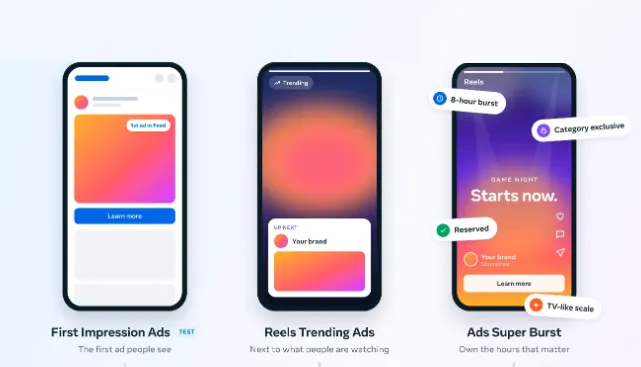
At its brand summit on 15 October Meta announced Ads Super Burst, which books a window of 3 to 24 hours with category exclusivity available, and an early US test of First Impression Ads, limited to one brand per day. It is also testing Aggregated View Time and now offers 15 Reels Trending Ads topics, including a Spanish-language category.
💡 Why it matters: For years Meta told everyone to hand over the budget and let the system spread it. Now it is selling reservation and exclusivity, the language of TV. That is a play for brand budgets and, frankly, a useful admission that some moments are worth paying for in advance. No pricing has been published, and Social Media Today expects these to be expensive.
🚀 Takeaway: If you have a dated moment like a Black Friday drop, ask your Meta rep about Super Burst availability and price it against what you spend on the same reach through Advantage+. If you market to Spanish speakers, check the new Reels Trending Ads category.
Source: Social Media Today
TikTok brought shopping search, one-click checkout and its ad network to the US
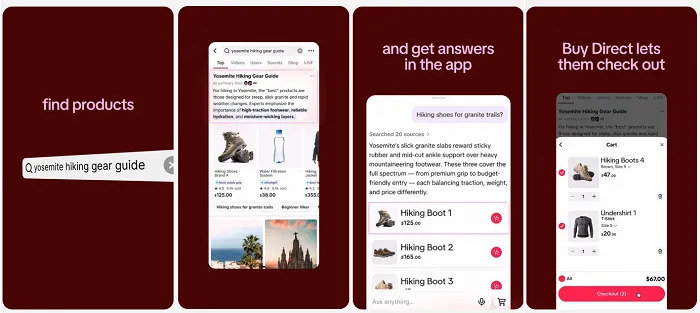
At Advertising Week TikTok announced an AI shopping assistant for in-app search, Buy Direct one-click checkout from the For You feed, Agentic Leads for collecting leads in DMs, and US expansion of its Ad Network, which it says reaches almost 400,000 apps. Smart+ search ads now automate keywords and creative.
💡 Why it matters: The pattern is the whole journey, from discovery to search to payment, inside one app, with less for you to control at each step. These are vendor announcements with no performance data, and availability varies by market, so check what your country actually gets. The search automation is the piece I would watch, because TikTok search is becoming a real intent channel.
🚀 Takeaway: Pull your top TikTok search terms, and compare them to your paid search list. Where the same product queries show up, test Smart+ search with a separate budget so that you can read the result on its own.
Source: Social Media Today
Pinterest inventory is now buyable through outside DSPs, though not yet in Europe

Pinterest introduced programmatic deals that make selected display and video inventory available through Yahoo DSP, Amazon Ads DVA+ and Google Display and Video 360, with Magnite facilitating. It covers North America, South America and Asia Pacific for now, and you need to go through a Pinterest sales rep.
💡 Why it matters: As I covered last month, Pinterest was making its search intent biddable. This is the other half of that effort: being easy to add to a plan that already exists. A platform choosing to loosen its walled garden says something about where it stands against the giants. European readers can only watch for the moment, which is annoying but useful as a preview.
🚀 Takeaway: If you buy in LATAM or North America, ask your DSP team for a Pinterest deal quote and check for audience overlap against your native Pinterest campaigns. In Europe, ask your rep directly when this arrives.
Source: Social Media Today
🔒 GPTs, Emerging Tech & Data & Privacy
The EU Council backed fewer cookie banners, audience measurement included
On 21 October the Council agreed its position on the data protection part of the Digital Omnibus. It adds purposes where consent is not needed to place cookies, with audience measurement and device security among the examples, and adds safeguards for processing sensitive data in AI development. It is ready to negotiate as soon as the European Parliament has its position.
💡 Why it matters: For anyone who has watched consent banners eat into their analytics, this is the most practically interesting line out of Brussels in years. But it is a negotiating position, not law, so nothing changes on your site today, and the exact scope of “audience measurement” will decide who benefits. It also sits alongside the stricter enforcement I flagged last month with the EDPB’s fining methodology. Looser rules on measurement and sharper penalties elsewhere can both be true.
🚀 Takeaway: Do not touch your consent setup because of this. Instead, separate your tags into measurement and advertising now, so that you can act quickly if the exemption survives, and so you have a clean tag list either way.
Source: Council of the EU
Google gave Gemini’s work agent its own email address

Google launched a unified agent in Gemini for businesses first. It gets its own Workspace account and email address, leaves an audit trail attributed to the agent rather than a person, connects to Microsoft 365, Slack, BigQuery, Snowflake and any MCP server, and can use Anthropic’s Claude as a third-party model.
💡 Why it matters: The audit trail is the real news. Plenty of marketing teams are already using agents informally, and the blocker for serious use is usually a simple question: who did this, and who is accountable? An agent with its own account answers the first half. Google also letting a competitor’s model in shows where the value is moving, which is to the workflow rather than the model.
🚀 Takeaway: If your company uses Workspace, ask IT what an agent account would be allowed to touch in your analytics and ad platforms, and agree those limits before someone connects it for you.
Source: TechCrunch
🧰 Tool of the Month: CiteView
CiteView is an LLM tracker from Adsbot that shows how ChatGPT, Claude, Gemini, Perplexity and others talk about your website, with visibility, competitor share of voice and citation audits scored weekly. Full disclosure: its founder, Can Kıvanc, is a friend of mine from the university, and his digital marketing agency is a Frizbit partner, so read this with that in mind. I have also tested it myself, and it works really well. Given how much of this issue is about the gap between AI hype and AI numbers, I like tools that replace opinion with a dashboard. The two features I would look at first are persona tracking, which runs prompts as a specific customer type, and localization, which matters if you sell across several European markets and the answers differ by country. Plans start at $29 a month for ChatGPT only, with four models at $149, and there is a free trial, so trying it is a cheap experiment.
🚀 News from Frizbit
No product news from us this month, but I spent October in plenty of rooms without leaving Barcelona, and I came out of them with a few opinions.
At Shift AI Europe on 13 and 14 October, the event formerly known as SaaStock (thanks to Tom at Helply for inviting me), what stayed with me is that the interesting question for software companies is no longer whether AI changes the product. It is what customers will still pay for once it has. On 15 October I was at Clay Gallery, the Clay Club Barcelona evening organized by Oriol Serra, with a look at what came back from Sculpt while an artist painted live.
On 28 October I stepped outside marketing altogether for the Congrés Catalunya Circular, and I am glad I did, so thanks to ACCIÓ for inviting me. An economy built on keeping materials in use has more in common with retention marketing than you would expect, since in both cases it costs far less to keep what you already have than to go and find more. And on 30 October I joined the Marketing Leaders Breakfast organized by Sophie Steffen and Clemens Rychlik, a nice farewell to Samurai Experience, which is closing its doors. I have come to value a small table over a big stage, because that is where people admit what is not working.
Thanks to the organisers, and if we crossed paths at any of them, send me a note.
📅 Upcoming Dates
- 11 November Singles’ Day. Worth treating as your dress rehearsal for tracking, stock feeds and creative testing.
- Mid-November Microsoft Advertising starts rolling out search term landing page reporting.
- 27 November Black Friday. 30 November Cyber Monday.
- In person in Europe this month, if you want to actually be in the room:
- 4 to 5 November E-SHOW, part of Tech Show Madrid, IFEMA Halls 3 to 5. The obvious one for Spanish e-commerce, and it is this week. I’m thinking of going, so if you will be there, give me a heads-up.
- 7 November MeasureCamp Stockholm at Eidra, Grev Turegatan 1. Free Saturday unconference where the attendees are the speakers.
- 9 to 12 November Web Summit, Lisbon. Very big and not only about marketing, so go for the people more than the talks.
- 14 November MeasureCamp Brussels at Les Ateliers des Tanneurs. Free, eighth edition, and small enough to have real conversations.
- 21 November MeasureCamp Zurich at Migros Gen.-Bund. Sold out, waiting list only.
- 24 to 25 November DMWF Europe, RAI Amsterdam. Aimed at CMOs and senior marketing leaders, with the organiser expecting more than 2,500 of them.
- Worth the flight, in the Americas:
- 4 to 5 November DigiMarCon World, Luxor Las Vegas. A broad digital marketing conference, for those already in the US.
- 7 November MeasureCamp Washington DC at Georgetown Capitol Campus. Second year, same free format.
👋 Sign-off
So here is where I land after October. The behaviour is moving to AI, the money is not there yet, and the big companies are buying what they cannot build while that gets sorted out. None of it should distract you this month. Your Black Friday will be won by the unglamorous stuff: clean data, tested creative, and flows that fire when they should.
I would love to hear one thing in particular: if you have run ChatGPT Ads, what did your revenue per visit look like against paid search? Real numbers from real accounts are what this conversation is missing. And as always, tell me what mattered most on your desk this month, and what I missed.
Good luck with peak season. See you on the other side.
Ata Gür
Co-Founder & CEO, Frizbit
Barcelona
📩 Want to see how you can recover your lost sales at your online business through Marketing Automation? Book a free demo with Frizbit and let’s explore it together.